
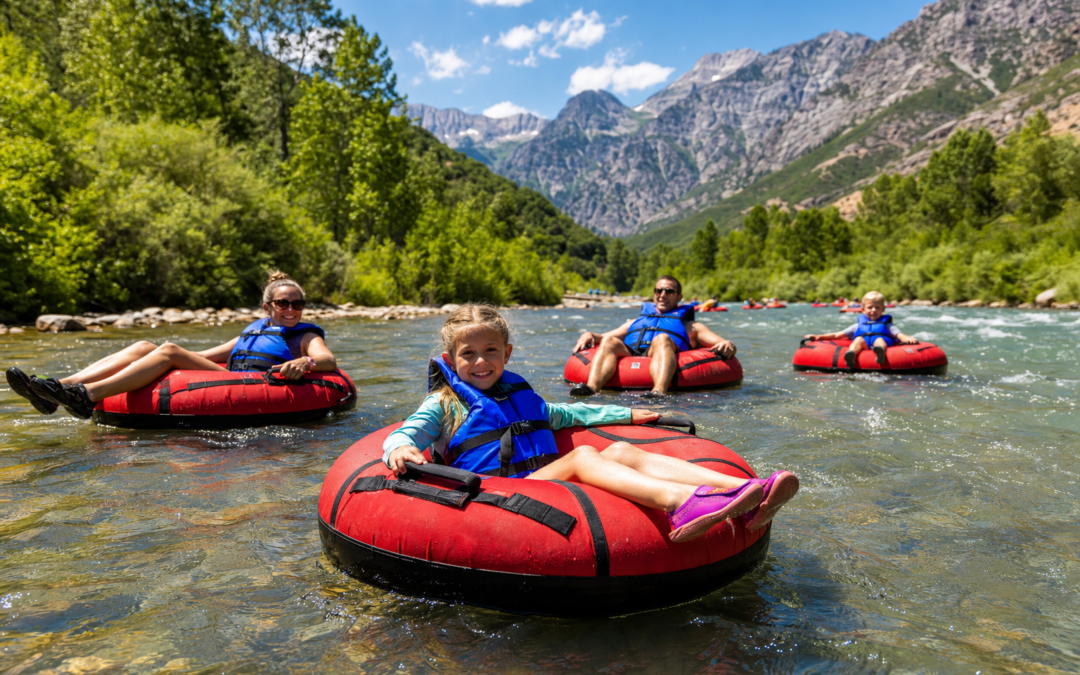
Floating the Provo River is one of Utah County’s classic summer adventures: cold mountain water, Provo Canyon views, a manageable float route, and easy access from Utah Valley. But it is still a real moving-water river—not a lazy pool ride—so the best float days start with the right route, the right gear, and a little local knowledge.
This 2026 Tube Utah guide covers where to start, where to exit, how long the float takes, what to bring, how to check conditions, and the safety details every first-timer should understand before tubing the Provo River.
Quick Answer: How to Float the Provo River
- Typical put-in: Lower Provo River Park near Deer Creek Reservoir.
- Typical take-out: Vivian Park in Provo Canyon.
- Distance: about 4.5 miles.
- Typical float time: around 1–2 hours depending on river flow and group pace.
- Water temperature: cold, often in the 50s even during summer.
- Most important gear: a properly fitted U.S. Coast Guard-approved life jacket and a durable river tube.
- Main hazard to plan for: the railroad trestle bridge area, where many floaters choose to exit and walk around.
Need tubes for your Provo River float?
Tube Utah rents durable river tubes, life jackets, pumps, dry bags, and float-day extras with American Fork pickup. Tubes are picked up deflated in easy-carry bags, and pumps are included with tube rentals.
Where to Put In for Provo River Tubing
The most common starting point for floating the Provo River is Lower Provo River Park near Deer Creek Reservoir. The Utah Valley Convention & Visitors Bureau’s current Provo River tubing guide describes the put-in as the area near the bridge and parking lot off US-189 in Provo Canyon.
Before entering, get completely ready on shore: secure your sandals, put on your life jacket, zip your dry bag, and keep a grip on your tube. The water can move quickly right away, especially when releases from Deer Creek are higher.
Where to Get Out: Vivian Park
The standard public take-out is Vivian Park. Watch for the public river exit signs and start moving toward the bank early. If you are using an outfitter or shuttle service, follow their specific exit instructions because some operators use private exits.
Do not treat the take-out as optional. Missing your exit can turn a relaxed float into a stressful logistics problem, especially for families or groups with multiple tubes.
How Long Does the Provo River Float Take?
Most floaters should plan on about 1–2 hours from the Lower Provo River Park area to Vivian Park. The same route is commonly described as roughly 4.5 miles by local tourism resources. Your actual time depends on river flow, wind, group size, how often people get stuck on rocks or branches, and whether you stop or walk around hazards.
If you are organizing a group, build in extra time for parking, shuttling, inflating tubes, sunscreen, bathroom stops, and gathering everyone after the take-out.
Is Floating the Provo River Safe?
The Provo River can be a great first river float when conditions are appropriate, but it deserves respect. It is cold, it moves, and it has hazards that are easy to underestimate from the road.
Recent local reporting has highlighted the danger around the trestle bridge area. In July 2025, KPCW reported on a paddleboarder rescued after becoming trapped under the Provo River’s “Trestle Bridge”, with rescuers working in water reported around 55 degrees. The Daily Herald later reported on the trestle bridge’s long-running safety concerns, and KUTV also covered the bridge hazard after the rescue.
The takeaway is simple: enjoy the river, but do not treat it casually. Wear a life jacket, avoid risky bridge passages, check conditions, and choose gear made for river use.
Life Jackets: What the Rules Say
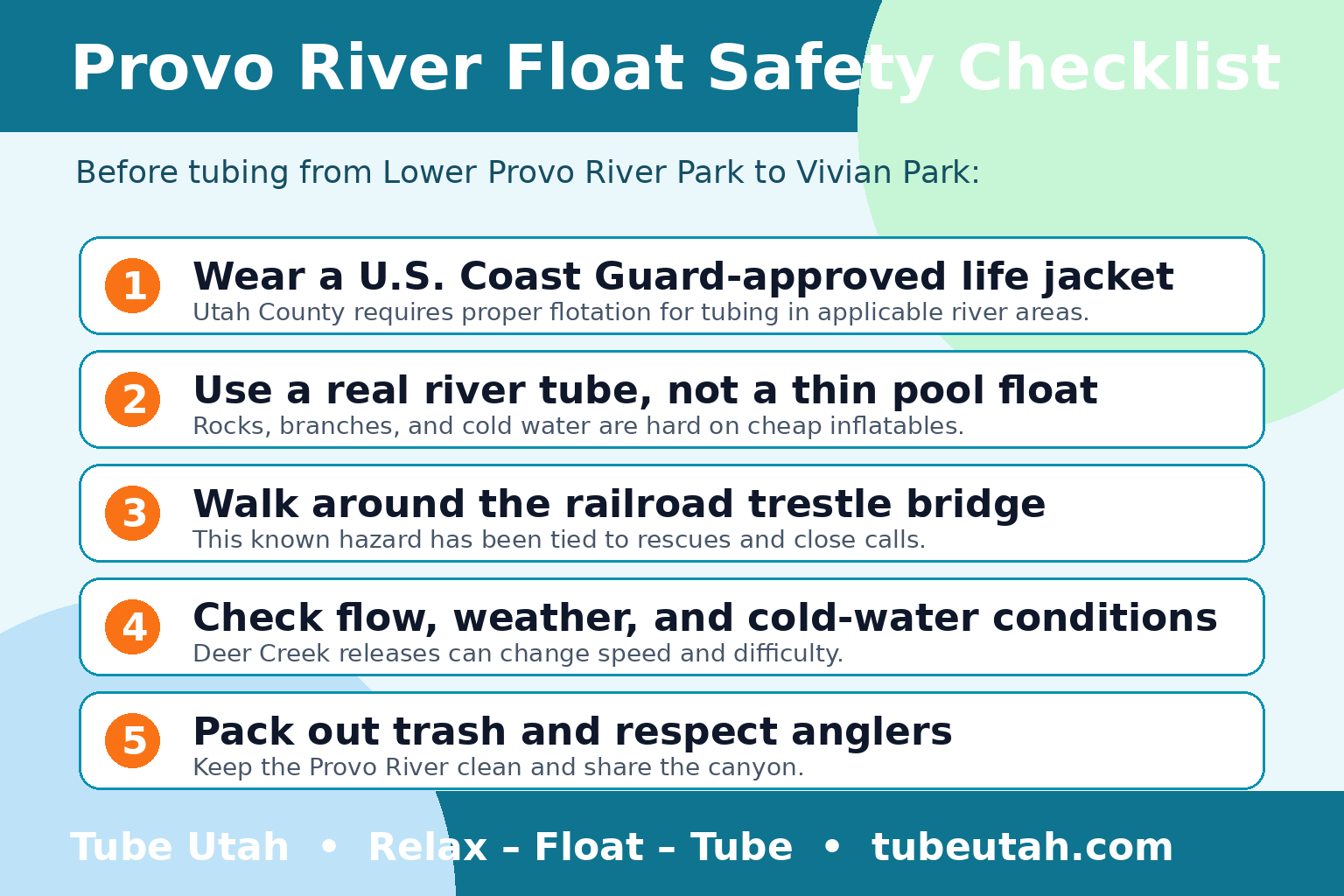
For Provo River tubing, a life jacket is not just smart—it may be required. Utah County Code Chapter 6, Section 6-1-5 says it is unlawful to swim or use inner tubes, air mattresses, or other floating devices on portions of the Provo River within unincorporated Utah County unless the person is wearing a life vest or jacket flotation device. The code specifies that the flotation device must be Coast Guard approved, in good and serviceable condition, properly sized, and able to provide positive buoyancy.
Our local recommendation is even simpler: everyone should wear a properly fitted U.S. Coast Guard-approved PFD every time they float the Provo River. That includes adults, strong swimmers, teenagers, and anyone sitting in a tube instead of a raft.
The Trestle Bridge: The Hazard Every Floater Should Know
One of the most important Provo River safety tips is to plan for the railroad trestle bridge area before you reach it. The bridge has pillars, current, and strainers that can create dangerous situations for people in tubes, kayaks, paddleboards, or rafts.
Many experienced floaters and outfitters recommend getting out before the trestle and walking around rather than trying to float through. Watch for signs, listen to guides or staff if present, and keep your group together before this section so nobody is surprised at the last second.
When in doubt, get out and walk around. A few minutes on shore is better than gambling with cold, fast water around bridge supports.
Can Kids Float the Provo River?
Older kids who are comfortable in moving water may enjoy the Provo River with close adult supervision, proper life jackets, and appropriate flow conditions. Younger children should be evaluated carefully and should ride with an adult if they go at all. Avoid high-water days, stormy weather, and any situation where adults are unsure about steering, cold water, or exits.
For families, the safest plan is to keep the group small, use durable tubes or rafts, make sure every child’s PFD fits correctly, and talk through the take-out and bridge plan before launching.
Should You Use an Outfitter or Float It Yourself?
Using an outfitter
An outfitter can make the day easier by providing tubes, life jackets, shuttle logistics, and route instructions. This is especially helpful for visitors, first-timers, large groups, or anyone who does not want to coordinate two vehicles.
Floating it yourself
DIY floating can work well if you plan ahead. You will need a shuttle plan, durable tubes, life jackets, a pump, dry bags, river shoes, and a clear understanding of where to enter, where to exit, and where to avoid hazards.
If you bring your own gear, do not use a thin pool float. The Provo River has rocks, branches, cold water, and current. A real river tube with a comfortable seat or bottom can make the float more enjoyable and reduce cold-water exposure.
What to Bring for Provo River Tubing
- U.S. Coast Guard-approved life jacket for every person.
- Durable river tube or raft.
- River shoes or sandals with heel straps.
- Inflation pump.
- Dry bag for keys, phone, and essentials.
- Waterproof phone pouch.
- Sunscreen and sunglasses with a strap.
- Water and simple snacks.
- Towel and change of clothes.
- Trash bag so nothing ends up in the river.
What Not to Bring
- Glass bottles or breakable containers.
- Cheap pool floats that can pop or fold.
- Loose flip-flops.
- Valuables you are not willing to lose.
- Long loose ropes that can become entanglement hazards.
- Trash, wrappers, or anything that can blow into the river.
Check Flow and Weather Before You Go
River conditions change. Deer Creek releases and canyon weather can affect how fast, cold, and technical the float feels. For current water data, check official or local sources such as the Central Utah Water Conservancy District streamflow data page. Local outfitters are also useful condition checks because they see the river every day during the busy season.
If flows are higher than expected, the water is colder than your group can handle, or storms are moving through the canyon, choose another day.
Best Time to Float the Provo River
Summer is the main Provo River tubing season. Warm afternoons are popular, but weekends can be crowded. Mornings may be quieter but colder. If you are bringing kids or a large group, choose a day with stable weather, reasonable flows, and enough daylight to avoid rushing the exit.
Parking, Shuttles, and Group Logistics
If you float without an outfitter, plan your shuttle before launching. Most DIY groups park one vehicle near the take-out at Vivian Park and another near the put-in. Respect posted parking rules, do not block roads or gates, and expect busy lots on hot weekends.
For groups, assign one person to hold keys in a waterproof pouch and one person to sweep the launch and take-out areas for trash and forgotten gear.
Provo River Etiquette
The Provo River is shared by tubers, anglers, kayakers, paddleboarders, families, outfitters, and wildlife. Give anglers space, do not splash people on purpose, avoid trespassing on private property, and pack out every piece of trash you bring in.
Tube Utah Tip: Choose Gear That Matches the River
Tube Utah is based in Utah County, and we care about making float days easier for local families, visitors, and groups. For a moving-water float like the Provo River, comfort and durability matter. Bottomed tubes can help reduce cold-water exposure, sturdy handles help with control, and having a real pump saves time in the parking lot.
Need tubes, life jackets, or float-day gear for a Northern Utah water day? Check Tube Utah rentals and local float gear options before your next summer trip.
FAQ: Floating the Provo River
Where do you start floating the Provo River?
Most people start near Lower Provo River Park by Deer Creek Reservoir in Provo Canyon.
Where do you get out?
The common public take-out is Vivian Park. Watch for public river exit signs and move toward shore early.
How long does it take to float the Provo River?
Plan on about 1–2 hours for the common route, depending on flows and group pace.
Do you need a life jacket?
Yes. A properly fitted U.S. Coast Guard-approved life jacket is strongly recommended for everyone, and Utah County Code requires proper flotation for tubing or using floating devices on applicable Provo River sections.
Is the Provo River good for first-time tubers?
It can be, when flows and weather are appropriate and the group uses proper gear. First-timers should avoid high flows, wear PFDs, and understand the trestle bridge hazard before launching.
How cold is the water?
The river is cold even in summer, often in the 50s. Dress and plan accordingly.
Can I use a pool float?
A cheap pool float is not recommended. Use a durable river tube or raft designed for rocks, branches, current, and cold water.
What is the trestle bridge?
The trestle bridge is a known hazard on the Provo River route. Local reports and rescue coverage have highlighted the danger of becoming trapped around the bridge structure. Many floaters walk around it instead of floating through.
Sources and Further Reading
- Utah Valley CVB: Float the Provo River | The Ultimate Guide
- Utah County Code, Chapter 6: Boating / Provo River flotation device requirement
- KPCW: Wasatch County rescuers free paddleboarder trapped in Provo River
- Daily Herald: Provo River trestle bridge safety concerns
- KUTV: Recent rescue under Provo River bridge underscores known hazard
- Central Utah Water Conservancy District: Current streamflow data
Related Tube Utah planning guides
- Provo Canyon tubing guide
- American Fork Provo River tube rental pickup guide
- Provo River tube rental guide
- Provo River tube rental FAQ
Tube Utah is reservation-only: reserve your red-and-white river tubes, life jackets, pumps, and float gear online before pickup. No walk-ins and no delivery.
Planning from elsewhere in Utah County? See the Utah County tube rentals guide for reservation-only pickup and Provo River float planning.