
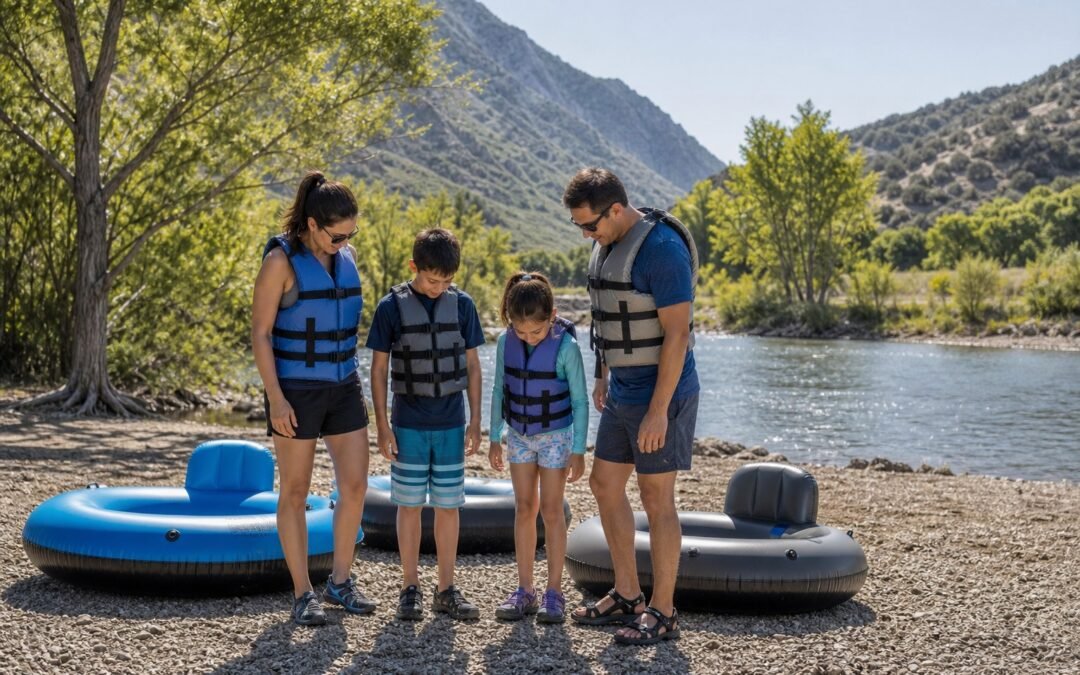
The wrong shoes usually announce themselves at the worst moment: one flip-flop sails away, a bare foot lands on a sharp rock, or somebody spends the walk back curling their toes just to keep a loose sandal attached.
For a Utah river float, footwear has a simple job. It should stay on, give you useful grip on shore and protect your feet from the ground you may have to cross. Most loose flip-flops fail that test. Secure water shoes are the best all-around choice for most first-timers, while sturdy sport sandals with heel straps can work for people who prefer an open design.
Quick answer: Wear secure water shoes or river sandals with a heel strap and a treaded sole. Closed-toe water shoes give more coverage around rocks, sticks and uneven banks. Skip loose flip-flops, slides and bare feet. Whatever you choose, test the fit on dry ground and keep a clean, dry pair in the vehicle.
Water shoes, sport sandals or flip-flops?
There is no single shoe that fits every foot and every float. The better question is whether the pair works for the full day, including the gravel bank, parking area, put-in and takeout. You are choosing for more than the time spent sitting in a tube.
| Footwear | Where it works | What to watch | Tube Utah take |
|---|---|---|---|
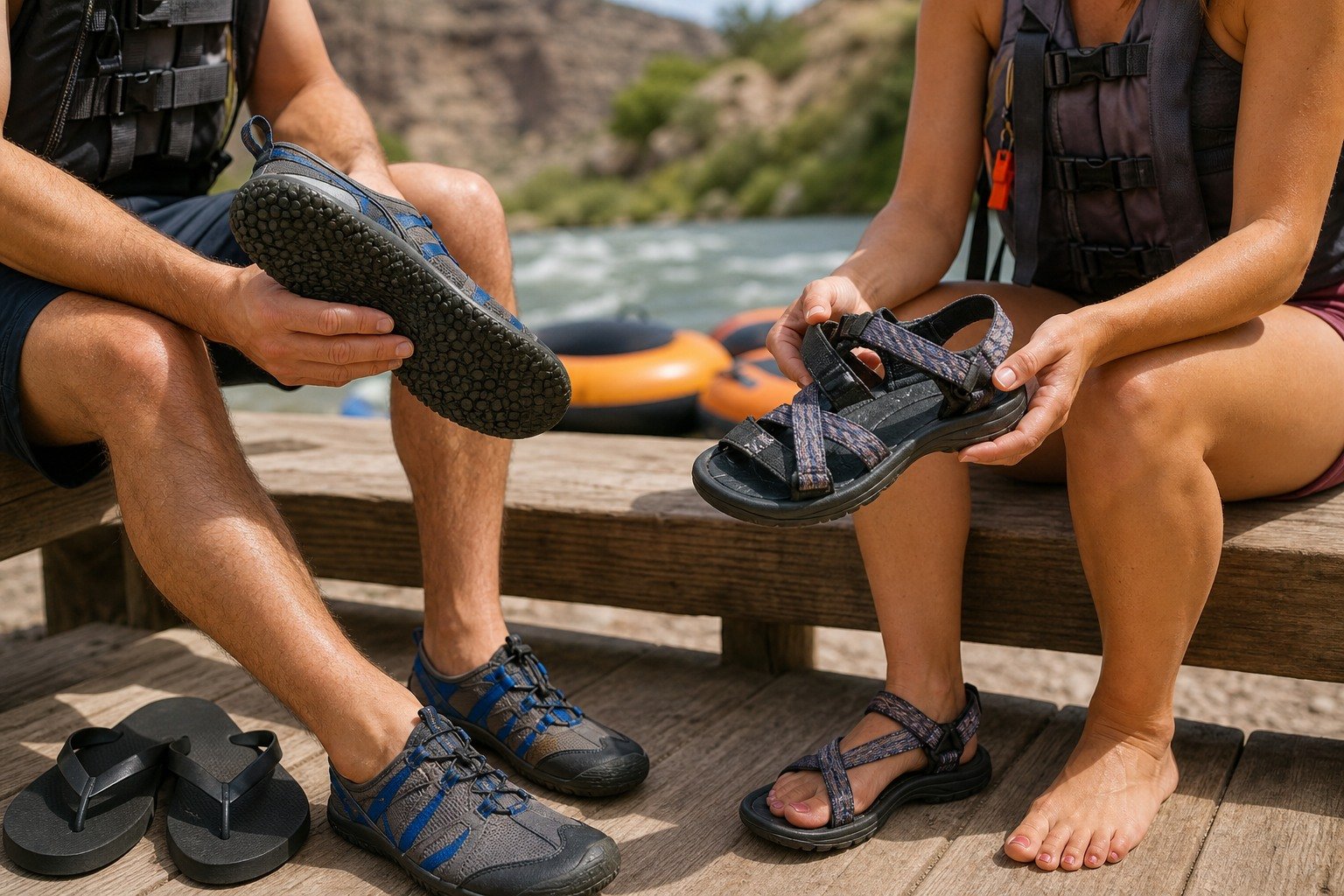
| Closed-toe water shoes | Rocky banks, gravel, short walks and first-time river days | Thin soles, loose heel cups and slow-drying fabric | Best all-around pick for most groups |
| Sport sandals with heel straps | Warm days and people who want drainage and airflow | Exposed toes, rubbing straps and a loose heel | Good if the fit is secure and the sole has tread |
| Old running shoes | A practical backup if they fit well and can get soaked | Heavy wet fabric, loose laces and a long drying time | Better than going barefoot; not always comfortable afterward |
| Flip-flops or slides | Dry changing areas and the ride home | Easy to lose; little coverage; often a smooth sole | Pack them for later, not for the river |
| Bare feet | Not a good plan for river access | Direct exposure to hot pavement, gravel and submerged objects | Wear something secure |
Why closed-toe water shoes are the easy recommendation
Closed-toe water shoes solve several small problems at once. They drain, they stay attached when fitted correctly, and the upper covers the front of the foot. That coverage matters most before and after the float, when people step around rocks, branches and uneven ground.
The National Park Service guidance for river crossings warns that going barefoot reduces traction and exposes feet to submerged hazards. It also notes that open-toed sandals do not protect toes from those hazards. A tubing put-in is not the same thing as a backcountry river crossing, but the practical footwear lesson carries over: give your feet traction and a layer between skin and the riverbed.
Look for a flexible rubber sole with visible tread, a heel that does not slide, and enough room to move your toes. The shoe should feel secure without being painfully tight. Cheap sock-style shoes can be comfortable, but inspect the sole. Some are so thin that every piece of gravel becomes part of the experience.
When heel-strap sandals work well
A real sport sandal is different from a flip-flop. It has a strap behind the heel, a shaped footbed and a sole made for walking. For many adults, that is enough for a straightforward float day. Sandals also drain quickly and may feel less clammy on the drive home.
The tradeoff is toe coverage. If your route includes a rough bank, a rocky entry or a person who tends to stub toes, a closed shoe is the calmer choice. Check every strap for rubbing before the trip. Wet grit under a strap can turn a small hot spot into an annoying walk back to the vehicle.
Why flip-flops are a weak river choice
Flip-flops depend on your toes to keep them attached. That is manageable on a pool deck. It is clumsy on loose gravel or while carrying a tube. If one comes off in moving water, chasing it creates a new problem. Let the cheap sandal go rather than turning lost footwear into a risky recovery attempt.
Slides have the same basic weakness. They are comfortable at the vehicle, but they have no heel retention. Pack them in a tote with a towel and dry clothes. Wear the secure pair for the part of the day that involves the river.
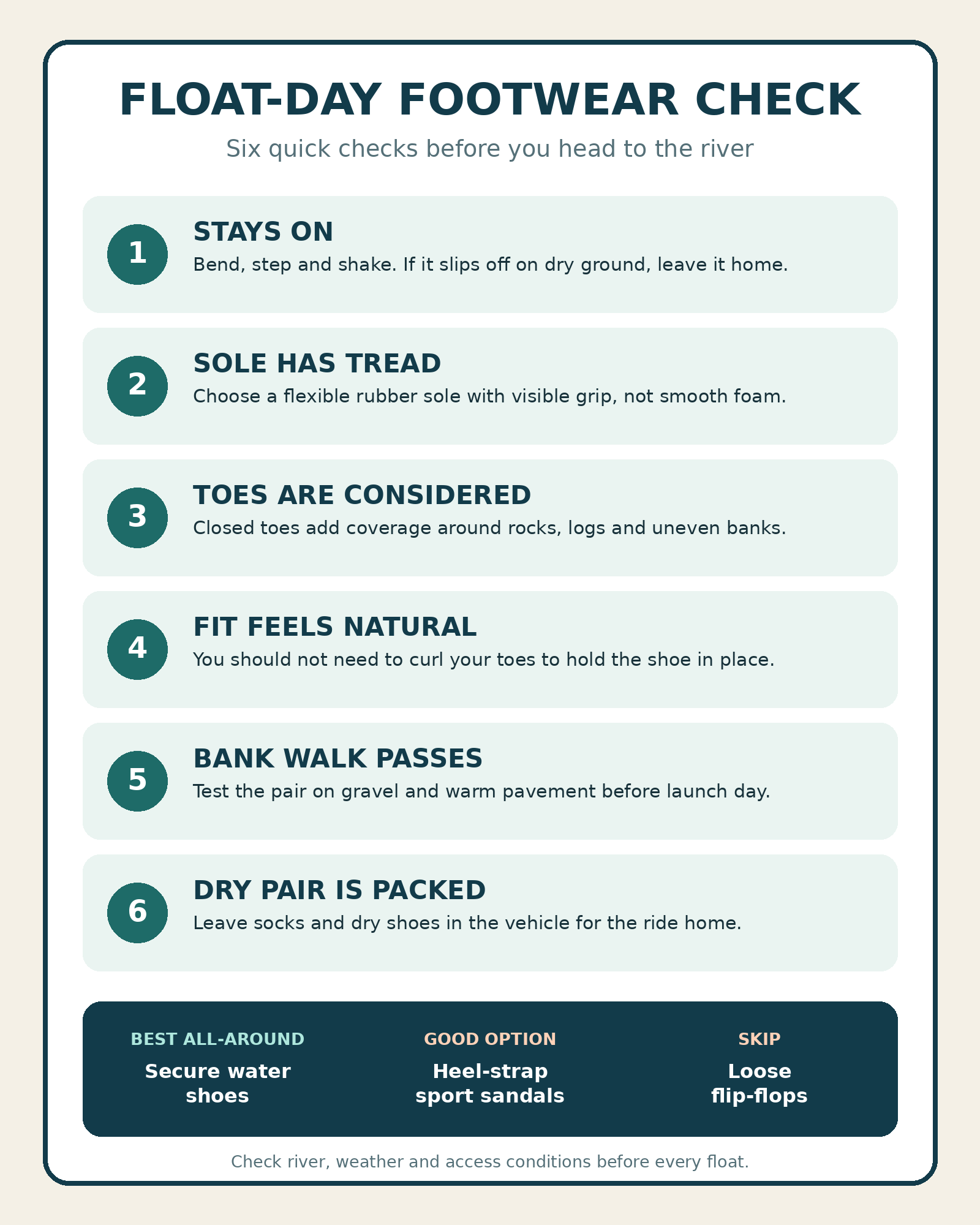
Do the shake test: Put on the wet pair, bend both knees, take several quick steps and shake each foot. If the heel lifts out or you have to curl your toes to hold the shoe, choose another pair.
Think about cold water, not just hot pavement
Utah summer air can be hot while river water feels startlingly cold. The National Weather Service cold-water guidance explains that sudden immersion can trigger rapid breathing even in water that does not look especially cold. Footwear does not replace a properly fitted life jacket or good judgment, but a secure shoe keeps one common distraction off your list.
If your feet get cold easily, try thicker water shoes or thin neoprene socks that fit without making the shoes tight. For more context on the river itself, read why the Provo River stays cold in summer. Then check current weather, flow, access and water conditions on the day you go. An evergreen gear guide cannot tell you whether a particular float is appropriate for your group today.
How to fit river footwear for kids
Buying several sizes too large to get another season out of a water shoe often backfires. A loose shoe folds, twists and collects gravel. Fit the pair the child will wear now, then watch them walk and squat in it.
- Check that the heel stays seated without pinching.
- Leave enough toe room for comfort, but not enough for the foot to slide forward.
- Have the child walk on gravel before float day.
- Trim or secure long laces so they do not trail.
- Pack dry socks and shoes for afterward.
Footwear is only one part of the decision. Parents should also review the Provo River tubing with kids guide and decide whether the route and current conditions fit each child’s swimming ability, comfort and supervision needs.
Your five-minute footwear check
- Stays on: No sliding heel and no toe-curling required.
- Has tread: The sole has visible texture and is not worn smooth.
- Covers enough: Choose closed toes when the bank or route is rough.
- Works wet: No painful seams, loose insoles or rubbing straps.
- Has an after-float plan: Dry socks and shoes are waiting in the vehicle.
Add the shoes to your full Provo River tubing packing list. Before leaving home, use the Provo River tubing guide to review the route, access, current conditions and known hazards. A shoe choice cannot make moving water safe.
Getting the rest of the gear together? Tube Utah’s life jacket and tube rental options can simplify the equipment side of a Utah County float day. Footwear is personal gear, so bring a secure pair that already fits. If you have a pickup or group-planning question, contact Tube Utah before the trip.
Frequently asked questions
Can I wear Crocs tubing?
A snug pair with the heel strap engaged can stay on better than a loose slide, but many styles leave the heel and part of the foot exposed. Test the fit and sole on gravel. If the shoe shifts or the tread is smooth, use a more secure water shoe.
Are old sneakers okay for river tubing?
They can be a practical option if the sole still has tread, the laces stay secured and you do not mind soaking them. Expect regular running shoes to hold more water and dry more slowly than footwear designed for water.
Should water shoes fit tight?
They should fit snugly enough to stay on, not so tightly that they pinch or numb your feet. Walk, squat and shake each foot before deciding. Try them with any neoprene sock you plan to wear.
Do good shoes replace a life jacket?
No. Footwear helps with traction, coverage and comfort. It does not keep a person afloat. Utah State Parks recommends wearing a properly fitted life jacket while boating and explains fit and approval information on its life jacket guidance page. Review the exact rules and conditions for the waterbody and activity you choose.
Sources and further reading
- National Park Service: Safe River Crossings: footwear, traction and submerged-hazard guidance.
- National Weather Service: Cold Water Hazards and Safety: cold-water response and preparation.
- Utah State Parks: Life Jackets: fit, wear and boating-safety guidance.
- Central Utah Water Conservancy District: Streamflow Data: check current Provo River and Deer Creek release information before a float.