
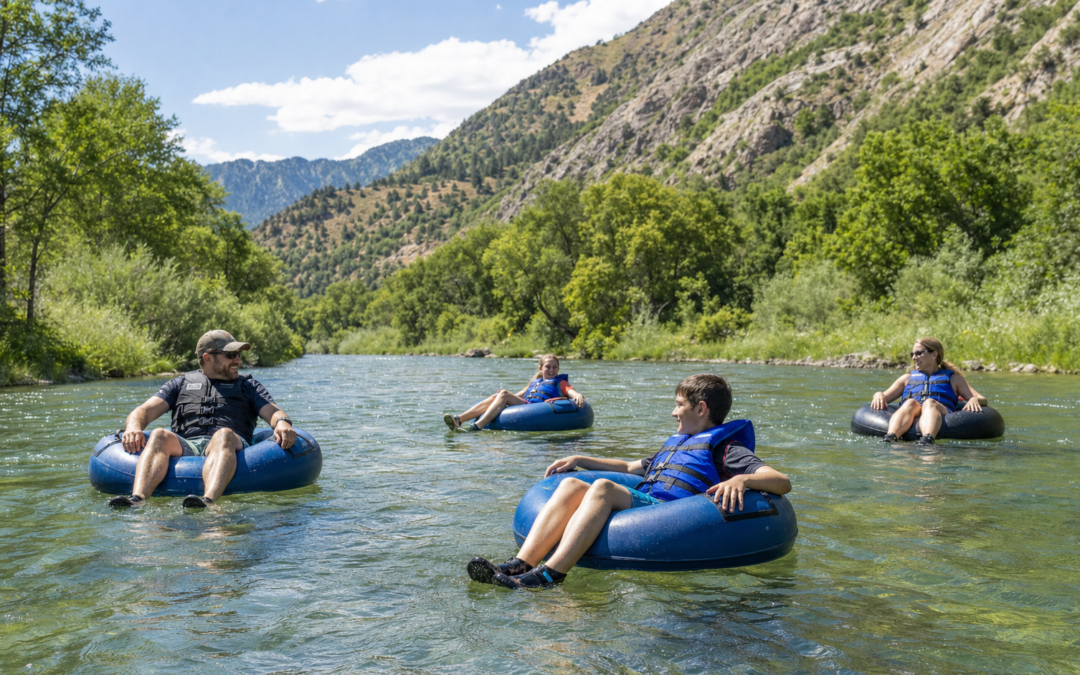
Quick answer: The lower Provo River is fed by releases from Deer Creek Reservoir. In summer, a reservoir can hold warm water near the surface while deeper water stays cooler. Water released through the dam then enters a shaded, moving canyon river, so a hot afternoon in Utah County does not guarantee warm river water. The exact temperature and flow change with reservoir operations and weather, so check current conditions before you launch.
The first splash is usually the giveaway.
You can leave American Fork or Provo in 90-degree sunshine, reach the canyon in shorts, and still find water that feels sharply cold around your legs. That is not a weather glitch. The lower Provo River behaves differently from a shallow pool or a sun-warmed beach at a reservoir.
The short explanation starts upstream at Deer Creek Reservoir, continues through the dam, and ends in a moving river tucked inside Provo Canyon.
Deer Creek Reservoir sets the stage
The popular lower-river float runs below Deer Creek Dam. The U.S. Geological Survey monitoring location below Deer Creek Dam is a useful geographic reference for that connection, and the Bureau of Reclamation identifies Deer Creek Dam as part of the Provo River Project.
That matters because the water entering the lower river is not simply a thin surface layer baking in the afternoon sun. It has been stored in a deep reservoir, then passed through dam and intake infrastructure before continuing down the Provo River.
Deer Creek’s intake system also is real working infrastructure, not background scenery. A three-year intake and guard-gate upgrade was completed in 2026, according to KPCW’s report on the Deer Creek Dam project. The story is a good reminder that releases are managed as part of a regional water system.
Deep water does not warm evenly
Sunlight warms the top of a lake or reservoir first. During summer, deeper reservoirs often separate into layers: warmer water near the surface and cooler, denser water below. Scientists call this thermal stratification.
Dam-release temperatures depend on where the outlet draws water, the reservoir’s condition, and current operations. The EPA’s primer on lake science explains how summer heating can create a warm upper layer and a cooler layer below it. That helps explain why water below a dam can feel different from the air above it or the reservoir surface people see from shore.
For floaters, the practical point is simple: do not use the afternoon air temperature, or even a posted reservoir-surface temperature, as a substitute for the river temperature.
The canyon slows the warm-up
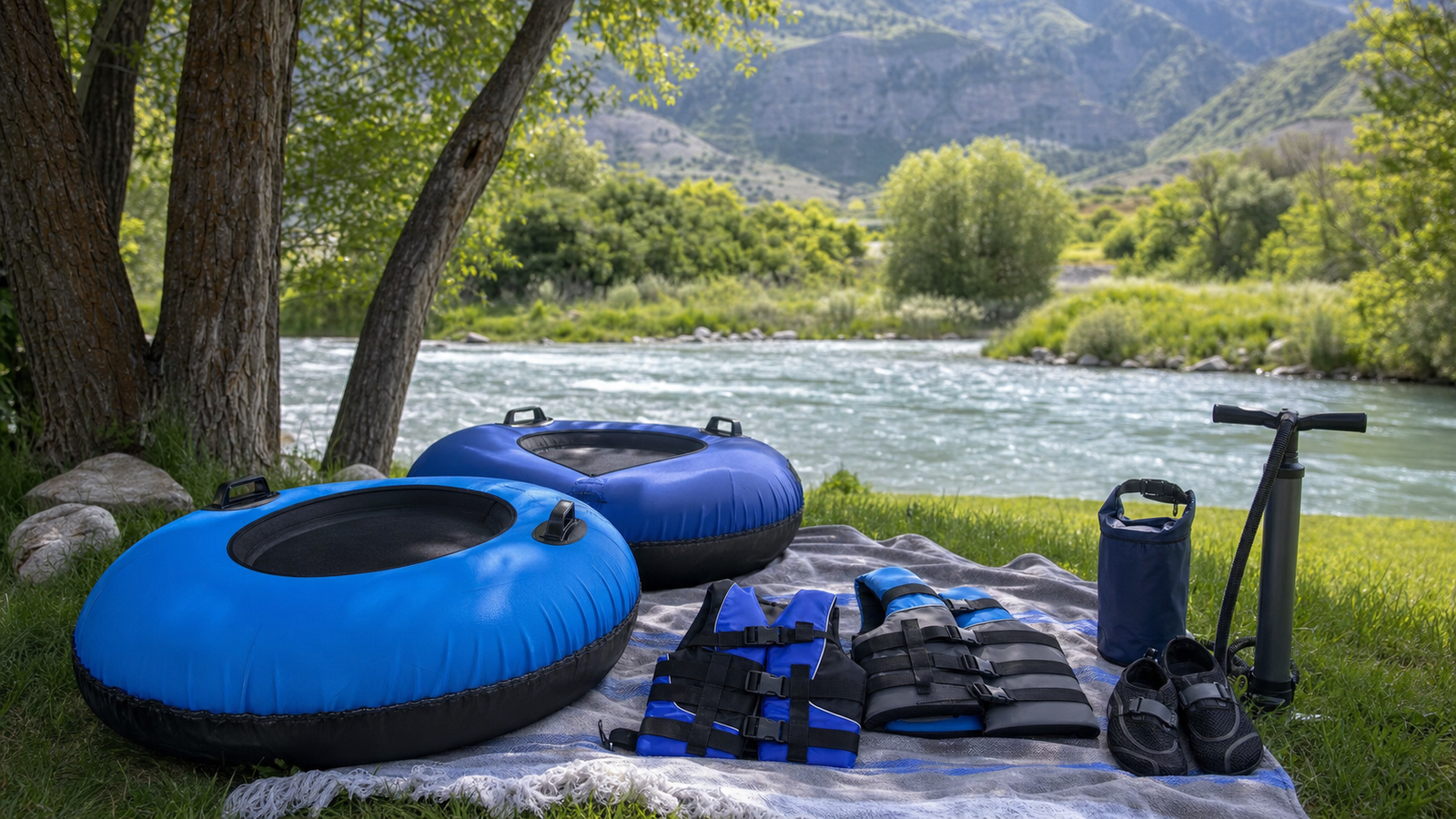
Once water leaves the dam, it moves through Provo Canyon. Trees, canyon walls, time of day, weather, and the volume of water moving downstream all affect how quickly it warms.
The river does warm as it travels, but not at one fixed rate. A sunny stretch at 4 p.m. can feel different from a shaded morning run. A change in release or flow can change both the pace of the float and the amount of time your body spends in the water.
This is why a single number from last week is not a reliable promise for this weekend. Use the Central Utah Water streamflow dashboard and a current weather forecast as pre-trip checks, then make a conservative call for your group.
Why cold water changes a tubing day
Cold water is more than a comfort issue. The National Weather Service cold-water guidance explains that sudden immersion can trigger a gasp and rapid breathing, even when the air feels warm and even for confident swimmers.
A tube helps keep much of your body out of the water, but not every tube offers the same separation. A sturdy solid-bottom tube reduces constant contact with cold moving water. It also gives you a more stable place to sit than a thin pool float.
A properly fitted life jacket matters if you come out of the tube. Put it on and secure it before launch rather than carrying it or tying it to the tube. For a broader look at currents, children, obstacles, and decisions to skip a float, read what first-timers should know about Provo River safety.
A better cold-water plan
Choose gear that keeps you supported
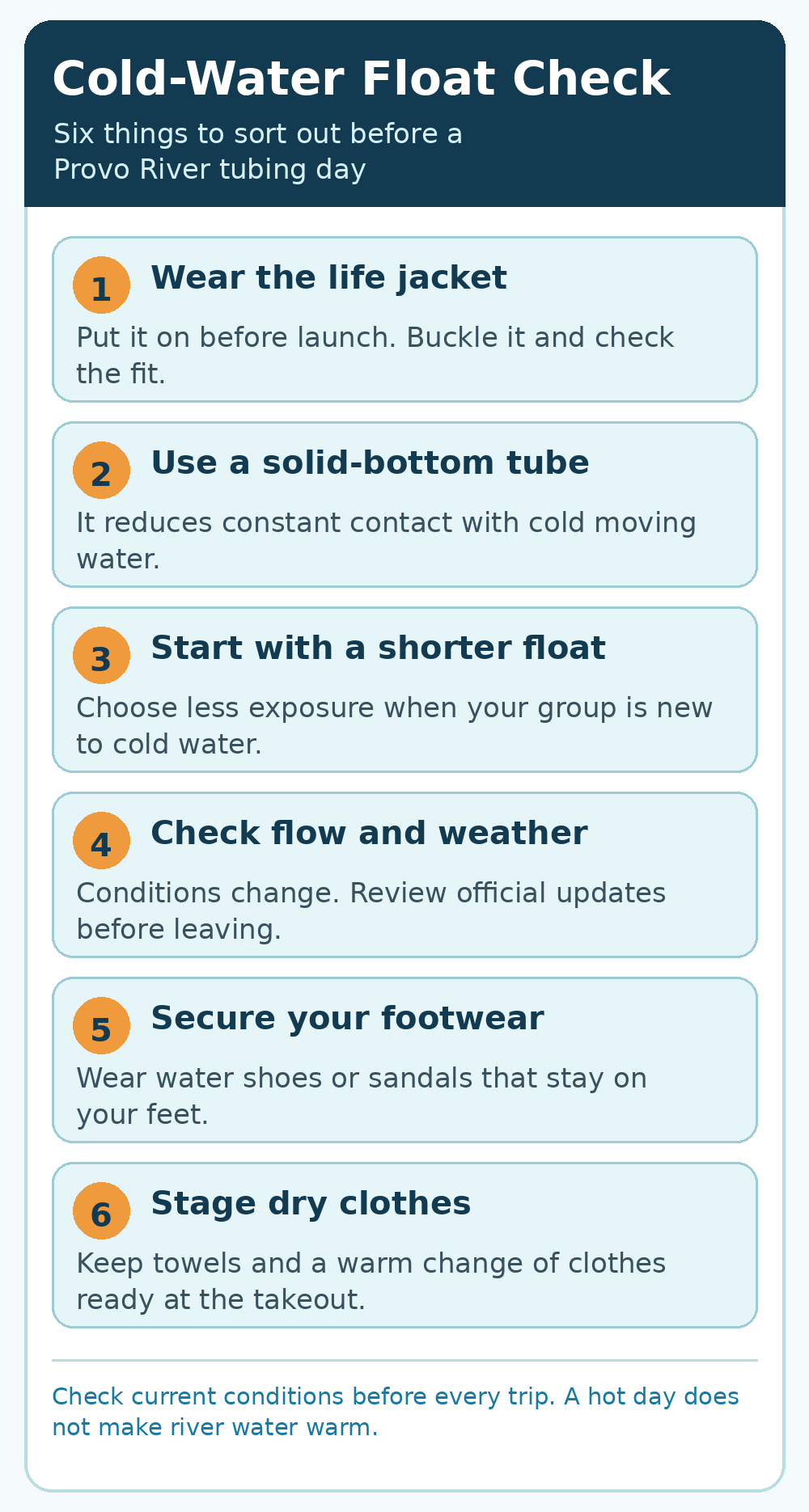
- Use a durable river tube with a solid bottom.
- Wear a properly fitted life jacket from launch to takeout.
- Wear water shoes or sandals that stay attached to your feet.
- Keep towels and warm, dry clothes waiting at the takeout.
Tube Utah’s life jacket and tube rental options include durable tubes, life jackets, and pumps, which removes a few gear variables before the drive into the canyon.
Limit exposure when your group is new
A shorter first float is easier to manage than discovering halfway through a long run that someone is cold, uncomfortable, or frightened. This is especially important with children. Our parent’s guide to tubing the Provo River with kids covers supervision, fit, comfort, and reasons to choose a different water day.
Check the whole picture before leaving
Review the flow, forecast, access information, and any official notices on the day of your trip. Conditions can change after an article is published. The weekend Provo River float checklist pulls those pre-trip checks into one place, while the main Provo River tubing guide covers route planning, put-ins, takeouts, and common hazards.
FAQ
How cold is the Provo River in summer?
There is no single summer temperature that applies to every day or every point on the river. Release operations, time of day, weather, shade, and downstream distance all matter. Check the latest official data available, and plan for water that may feel much colder than the air.
Does a hot day make the river safe from cold-water effects?
No. Warm air can create a false sense of security around cold water. The National Weather Service recommends knowing the conditions and wearing a life jacket when you are on or near cold water.
Is a solid-bottom tube worth it?
For cold moving water, it is a practical upgrade. The bottom creates a barrier between your body and the river, and a purpose-built river tube is better suited to rocks and current than a thin pool float. See what to bring tubing the Provo River for the rest of the packing list.
Should I skip the float if someone gets cold easily?
Possibly. Choose a shorter outing, use protective gear, or pick a different water activity if anyone is uneasy about cold moving water. Conditions and people vary, so make the conservative choice rather than forcing the plan.
Sources and further reading
- U.S. Geological Survey: Provo River below Deer Creek Dam monitoring location
- Central Utah Water Conservancy District: current and trending stream data
- National Weather Service: cold-water hazards and safety
- U.S. EPA: a primer on lake science and thermal stratification
- KPCW: completion of Deer Creek Dam intake upgrades
Planning your first canyon run? Start with the complete Provo River tubing guide, then line up your tubes, life jackets, pump, shuttle plan, and dry clothes before launch day.