
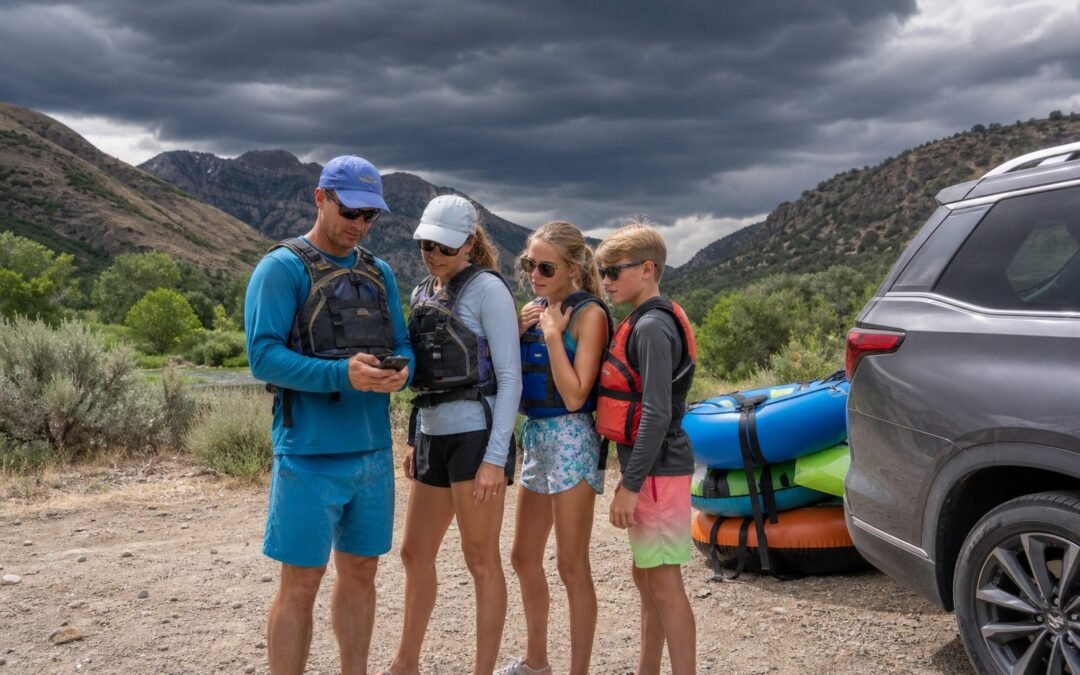
A stormy sky over Utah County can turn a simple float plan into a string of bad decisions: launch anyway, hope the dark cloud moves, then realize the pickup vehicle is still downstream. The better call is usually made before the tubes leave the car.
This guide is for Provo River and Northern Utah water days when summer storms are in the forecast. It explains what to check, when thunder ends the debate, and how to change plans without turning the whole day into a loss.
Why a summer storm changes a float day
A warm morning does not guarantee a clear afternoon. Thunderstorms can bring lightning, gusty wind, intense rain, hail, and localized flooding. On a river day, the problem is not limited to the water under your tube. Your group also has to reach the takeout, find the vehicle, and drive home.
The federal thunderstorm safety guide recommends paying attention to alerts and moving from outdoors into a building or roofed vehicle when a warning is in effect. For a float group, waiting until everyone is on the water makes that move harder.
Weather is one part of the go or no-go call. Review the steps in our weekend Provo River float check for flow, access, gear, and group planning too.
The four-part forecast check
Do not stop at the daily weather icon. A useful check answers four separate questions:
| Check | What to look for | Why it matters |
|---|---|---|
| Hourly forecast | Thunderstorm chances during the drive, launch, expected float, and pickup | A morning opening may close before the group reaches the takeout. |
| Active alerts | Warnings, watches, and advisories for the actual area | An alert provides more specific information than a general app icon. |
| Radar and sky | Storm direction, rain curtains, darkening clouds, and audible thunder | The forecast is not permission to ignore what is developing nearby. |
| Access route | Low spots, drainage, road conditions, and a clear route to shelter | Heavy rain can affect the pickup and drive even if the float section looks calm. |
Use the National Weather Service Salt Lake City forecast office as the primary weather check. Keep the page open rather than relying on a screenshot saved hours earlier.
If you hear thunder, the float is paused
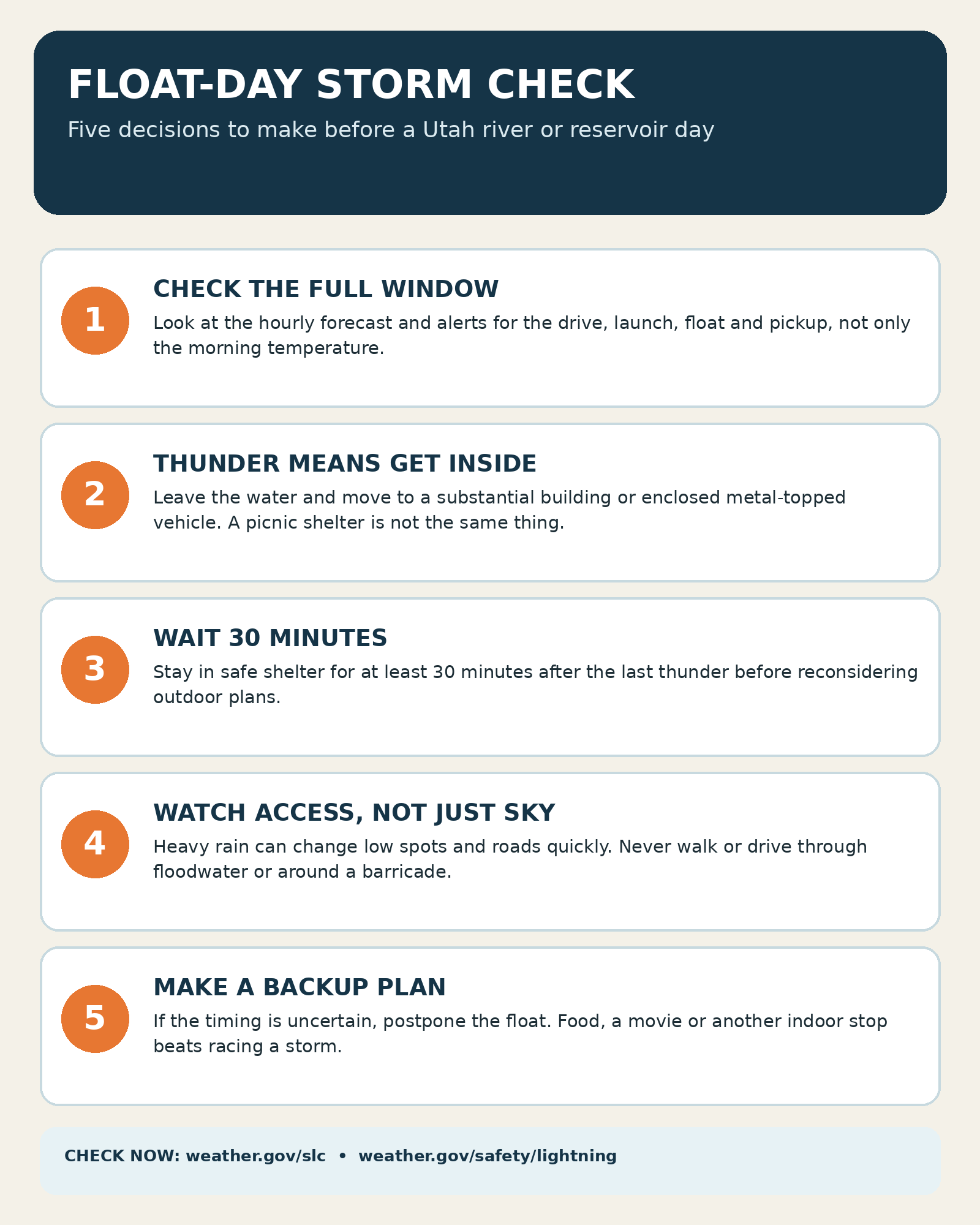
The National Weather Service is blunt: if you can hear thunder, lightning is close enough to strike. Its lightning safety guidance says to move immediately to a substantial building with electricity or plumbing, or to an enclosed metal-topped vehicle with the windows up.
A pavilion, picnic shelter, isolated tree, cliff, or rocky overhang is not a safe substitute. Neither is standing on the bank and watching the storm. Get everyone off and away from the water, then account for the whole group.
Remain in safe shelter for at least 30 minutes after the last sound of thunder. Restart the clock if thunder returns. That can erase the remaining float window, and sometimes that is simply the right answer.
Rain upstream and access problems still count
A storm does not have to sit directly over your tube to affect the day. Rain can reduce visibility, make banks slick, and create problems at low road crossings or drainage areas. Conditions can also change between launch and pickup.
The National Weather Service flood guidance says water levels and flow can change quickly. It advises people to move to higher ground when water rises and never walk or drive through floodwater or around a barricade. Water can hide a washed-out road, sharp debris, or other hazards.
Check roads and access separately with our Provo Canyon access and road closure watch. If the route to the put-in or takeout is uncertain, postpone instead of improvising around a closed or flooded section.
A practical postpone checklist
Change the plan when any of these are true:
- Thunder is audible at the put-in, takeout, parking area, or on the water.
- A warning affects your route or destination.
- The forecast window puts storms over the group before a realistic pickup time.
- You cannot identify a substantial building or enclosed vehicle that everyone can reach quickly.
- Heavy rain, poor visibility, rising water, debris, or unsafe access appears.
- Adults in the group are rushing because the weather window is closing.
A life jacket remains necessary float gear, but it is not lightning protection and it does not make flooded access safe. Review what first-timers should know about Provo River safety before deciding whether the river fits your group and the day’s conditions.
Build the backup plan before loading the car
Parents know the hard part of canceling is not the weather. It is telling a car full of kids that the plan changed. Decide on the backup while everyone is still home.
A late breakfast, movie, indoor activity, or meal stop can hold the day together. If a later weather window truly improves, start the forecast and logistics check again from the beginning. Do not assume the original launch and pickup plan still works.
For a future clear-weather trip, use the complete Provo River tubing guide and the first-timer packing list. Groups that need durable tubes, properly fitted life jackets, and pumps can review Tube Utah’s life jacket and tube rental options after the weather check supports the trip.
Frequently asked questions
Can we wait under a pavilion until the lightning passes?
Do not treat an open picnic shelter as lightning-safe shelter. The National Weather Service recommends a substantial building or enclosed metal-topped vehicle with the windows up.
How long should we wait after thunder?
Wait in safe shelter for at least 30 minutes after the last sound of thunder. If thunder returns, start the wait again.
Does a low rain percentage mean it is safe to launch?
No single percentage settles the question. Check the hourly timing, alerts, radar, visible conditions, access, and your ability to reach shelter. Recheck close to launch because forecasts change.
What if Saturday looks clear after a stormy Thursday?
That may offer a better window, but verify the current forecast, alerts, access, and river conditions on Saturday morning. Do not carry Thursday’s forecast forward as a promise.
Sources and further reading
- National Weather Service: Provo-area point forecast, checked August 13, 2026 at 2:16 a.m. MDT.
- National Weather Service: Lightning tips, including shelter and 30-minute guidance.
- National Weather Service: During a flood, including higher-ground and flooded-road guidance.
- Ready.gov: Thunderstorms and lightning, updated May 11, 2026.
- National Weather Service Salt Lake City forecast office for current Northern Utah forecasts and alerts.