
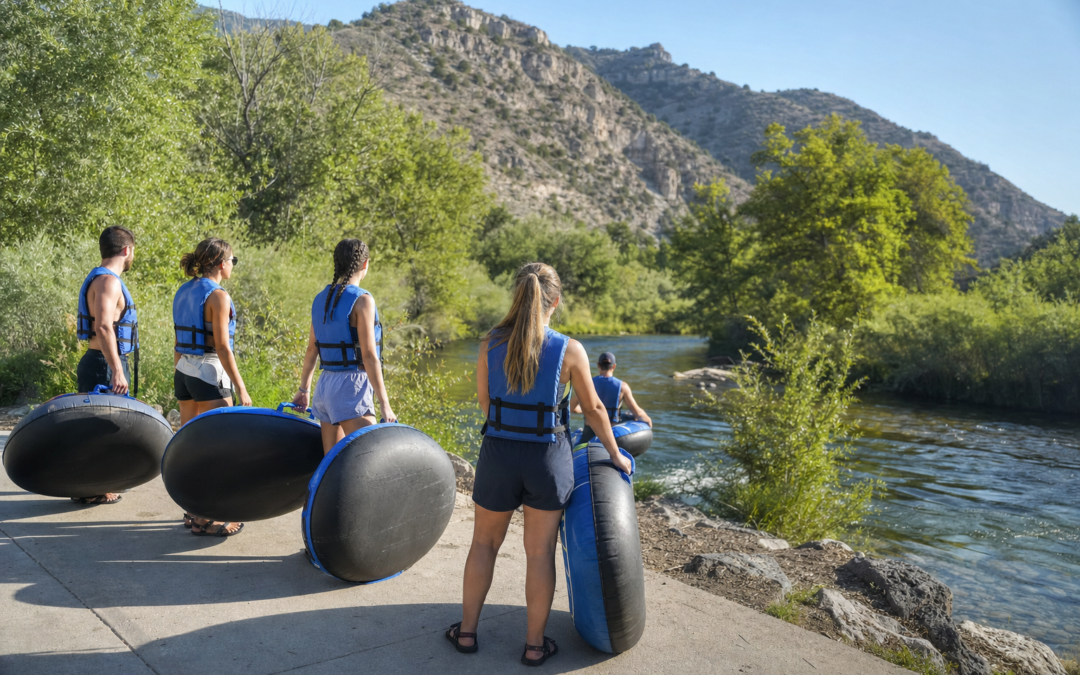
Quick answer: The Provo River can be a good summer float for prepared adults and families, but it is not a lazy swimming pool. The water is cold, the current changes, and hazards like bridge pilings and strainers deserve real respect. First-timers should wear a properly fitted life jacket, check the latest flow and weather, use durable river gear, and skip the float when the river or the group does not feel right.
At a glance: first-timer safety calls
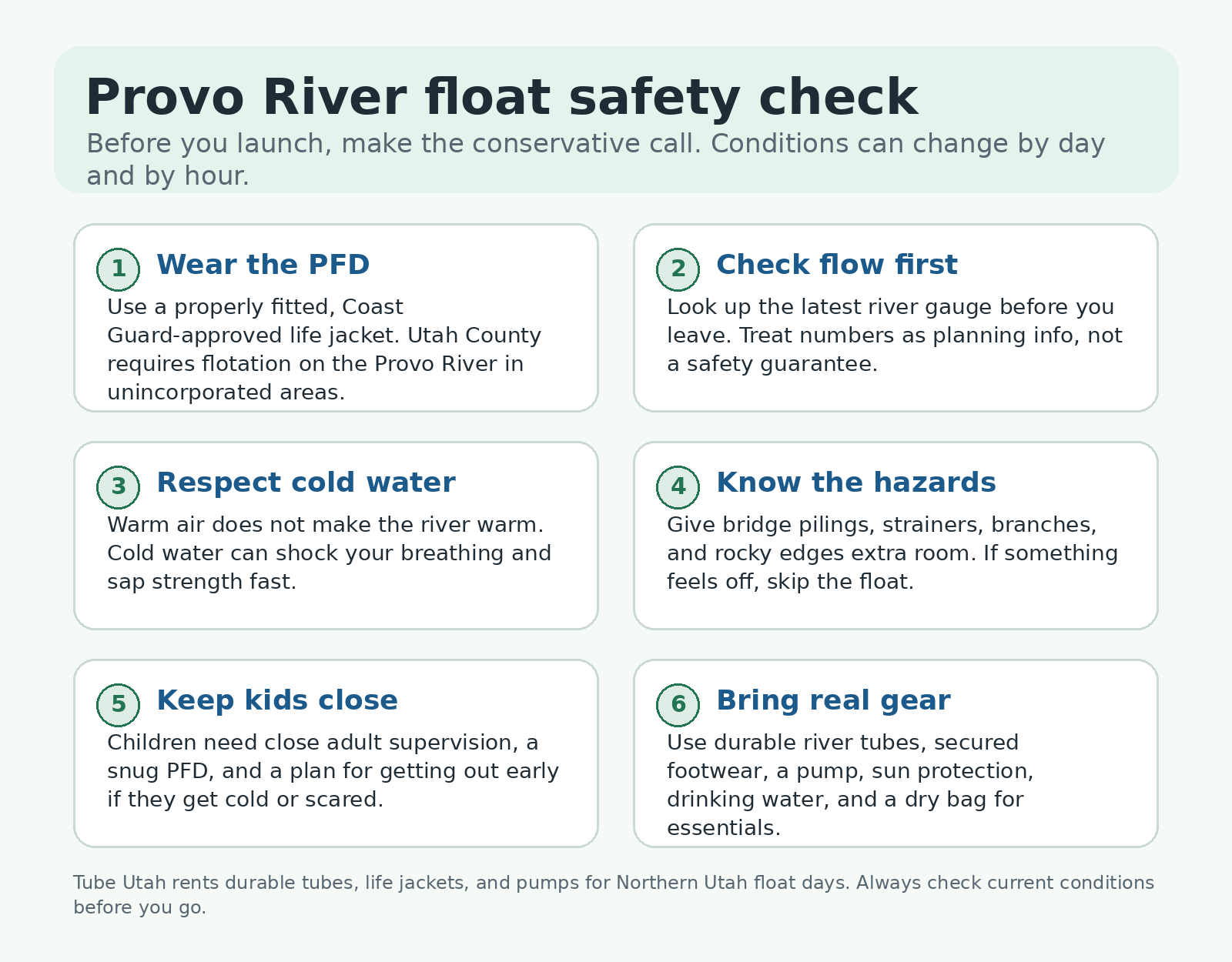
- Life jackets: Utah County requires a Coast Guard-approved flotation device for people swimming or using tubes/floating devices on the Provo River in unincorporated county areas.
- Cold water: Warm canyon weather does not mean warm river water. Cold water can affect breathing, strength, and judgment quickly.
- Flows: Check the latest Provo River gauge before you leave. Treat flow data as planning information, not a safety guarantee.
- Kids: Use extra caution with children. A snug PFD and close adult supervision are non-negotiable.
- When in doubt: If the water looks too fast, the group is nervous, storms are nearby, or gear is missing, save the float for another day.
So, is the Provo River safe to float?
“Safe” is the wrong word if it makes people relax too much. A better question is: is today a reasonable day for your group to float?
For many prepared floaters, the Lower Provo can be a fun summer river day. It is also moving water in a canyon. That means cold water, changing flow, rocks, brush, bridge hazards, and limited easy exits in some stretches. The river does not care that it is hot outside or that your group has been planning this for weeks.
If you are new to the area, start with our Provo River tubing guide and then use this article as your safety gut-check before you go.
Wear the life jacket. Seriously.
Utah County’s boating code says people swimming or using inner tubes, air mattresses, or other floating devices on the Provo River in unincorporated county areas must wear a Coast Guard-approved flotation device that is in good condition and properly sized. The county code is dry reading, but the point is simple: on this river, flotation is not just a nice idea.
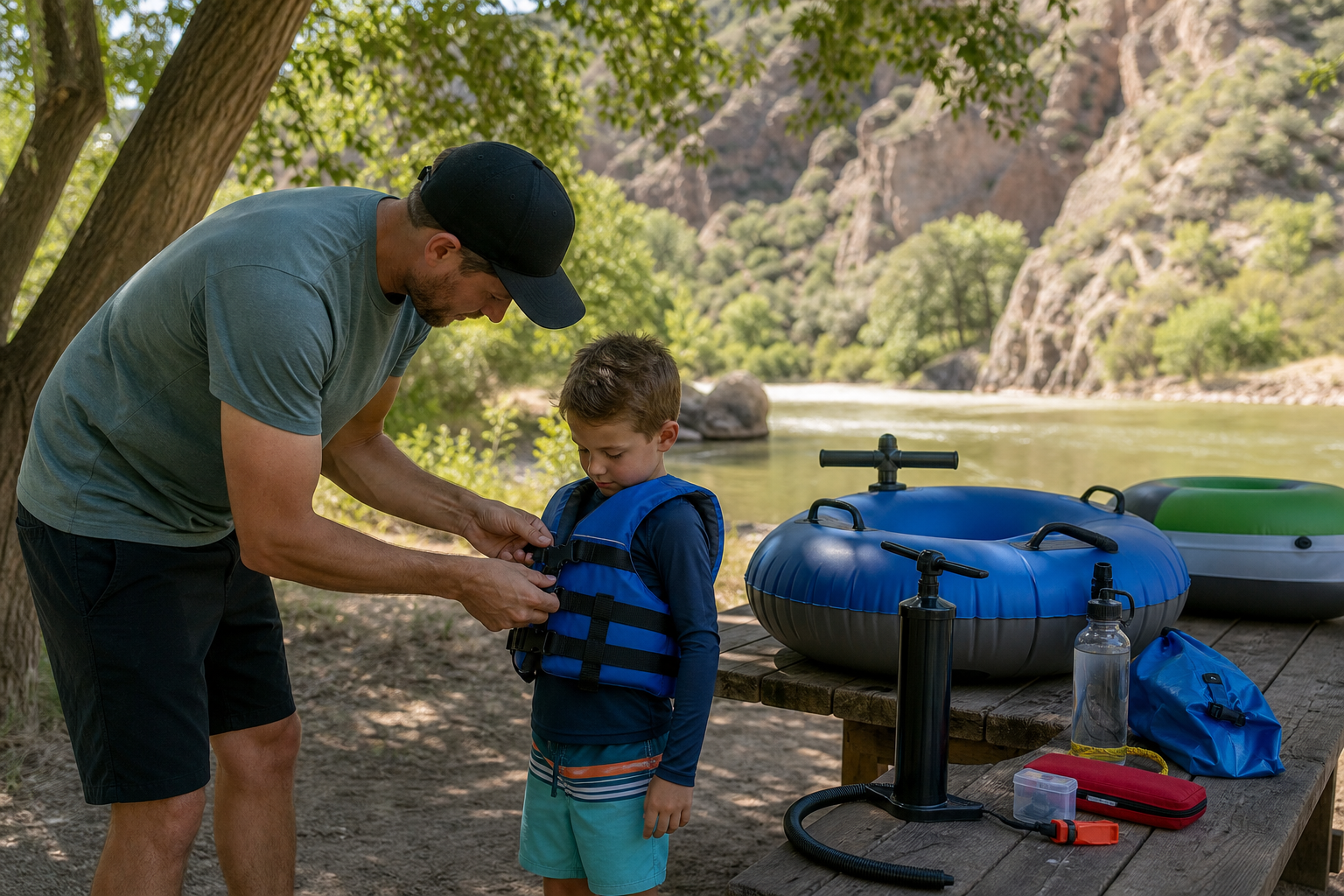
A life jacket still has to fit. Loose adult jackets on kids, half-zipped vests, or gear that rides up around the ears are problems you want to fix before anyone gets near the current.
- Buckle and zip the PFD before launching.
- Pull up gently at the shoulders. If it rides over the chin or ears, adjust it or use a smaller size.
- Make sure every child has a child-sized PFD, not an adult jacket cinched down as a workaround.
- Keep the PFD on until everyone is fully out of the river.
The cold water is part of the risk
The Provo River can feel surprisingly cold even on a blazing July afternoon. The National Weather Service warns that cold water can be dangerous even when the air is warm because sudden exposure can affect your breathing and how well your body works.
That matters for tubing because people underestimate how fast a fun float can turn uncomfortable. Kids get cold. Adults get tired. Someone slips getting out. A tube bumps a rock and the rider ends up in the water longer than expected.
Plan like the water is cold, because it often is. Wear a life jacket, keep the group together, choose secure footwear, and know where you plan to get out.
Check the current before you go
Flow changes are one of the big reasons the same stretch can feel different from week to week. The USGS Provo River at Provo gauge is a good official place to check current streamflow data before you leave. USGS data is provisional, so use it as a planning tool rather than a promise of what every bend in the river will feel like.
Do not treat any single number as a universal green light. Your group’s swimming ability, the weather, water temperature, debris, crowding, and your gear all matter. If the river looks faster than your group can handle, there is no shame in changing plans.
For weekend planning, pair the gauge check with our Provo Canyon access and road closure watch so you are not surprised by traffic, construction, or access issues.
The trestle bridge deserves extra respect
Locals talk about the trestle bridge because it is a real hazard, not because they are trying to scare visitors. In 2025, KPCW reported on a rescue after a paddleboarder became trapped under the Provo River’s “Trestle Bridge” in cold water. The lesson for tubers is not complicated: bridge pilings, low structures, strainers, and anything that can pin a person or a tube deserve a wide margin.
Do not drift casually into obstacles. Keep your eyes downstream. If you are unsure how to avoid a feature, get out before it rather than trying to figure it out from the water.
Is the Provo River good for kids?
Sometimes. Not always. The honest answer depends on the child, the adults, the conditions, and the plan.
Kids who are nervous in moving water, hate cold water, or cannot keep a PFD on comfortably may have a better day at a lake, splash pad, or shorter water outing. If you do take children, read our Provo River tubing with kids guide before you load the car.
For families, the conservative version of the plan usually wins:
- Put one capable adult near each child, not one adult loosely watching a whole cluster.
- Decide where you will get out before you start.
- Keep the group close enough to communicate.
- Bring warm layers or towels for after the float.
- Call it early if a child is cold, scared, or tired.
Gear that makes the day safer and easier
Good gear does not make the river harmless. It does reduce some avoidable problems.
At minimum, bring properly fitted life jackets, sturdy river tubes, secured footwear, sun protection, drinking water, and a way to inflate tubes before launch. Our what to bring tubing the Provo River checklist breaks that down in more detail.
Cheap pool floats are built for pools. The river has rocks, branches, current, and rough edges. If you are planning a Provo Canyon float day, use actual river tubes and bring a pump. Tube Utah rents durable tubes, life jackets, and pumps for local groups that want the gear handled before the canyon drive. You can start with the Provo River tube rental guide or compare tube rentals in Utah County.
When you should skip the float
This might be the most useful safety section in the whole article. Skip or postpone the float when:
- Storms, lightning, or heavy rain are in the forecast.
- The river looks high, pushy, muddy, or full of debris.
- Someone in the group does not have a proper life jacket.
- You do not know your take-out plan.
- Kids are already tired, cold, or nervous before launching.
- The group is relying on alcohol, bravado, or “we’ll figure it out.”
- You arrive late and would be floating into evening shadows or cooler temperatures.
A missed float is annoying. A bad river decision is worse.
First-timer float-day checklist
- Check the latest river flow from USGS.
- Check weather, especially storms and wind.
- Check road, parking, and canyon access before driving.
- Fit every life jacket at home or at pickup.
- Use sturdy tubes, not pool toys.
- Wear shoes that stay on your feet.
- Know the put-in, take-out, and backup exit plan.
- Keep phones and keys protected in a dry bag.
- Tell the group what to do if someone gets separated.
FAQ
Do I have to wear a life jacket on the Provo River?
In unincorporated Utah County areas of the Provo River, Utah County code requires people swimming or using tubes and other floating devices to wear a Coast Guard-approved flotation device that is properly sized and in serviceable condition. Check the current county code before you go, and wear the PFD either way.
Can beginners float the Provo River?
Prepared beginners can have a good day when conditions are reasonable, gear is right, and the group makes conservative decisions. Beginners should not treat the river like a pool or a lazy river ride.
What is the biggest first-timer mistake?
Underestimating the river. The usual pattern is missing gear, loose life jackets, cheap tubes, no flow check, and a group that does not know where it will get out.
Should families with kids float the Provo River?
Some families do. Others should choose a calmer water day. It depends on the child, current conditions, adult supervision, PFD fit, and the group’s comfort in moving cold water.
Sources and further reading
- Utah County Code, Chapter 6 Boating – county flotation and boating rules.
- USGS Water Data: Provo River at Provo, UT – current/provisional streamflow data.
- National Weather Service cold water safety – cold water risk basics.
- KPCW: Wasatch County rescuers free paddleboarder trapped in Provo River – local reporting on the trestle bridge hazard.
- Utah Valley: Float the Provo River – visitor-oriented route and float overview.
Planning a Northern Utah float day? Tube Utah can help with durable river tubes, life jackets, and pumps so your group starts with the basics covered. Check the conditions first, make the conservative call, and build the day around the people in your group.