
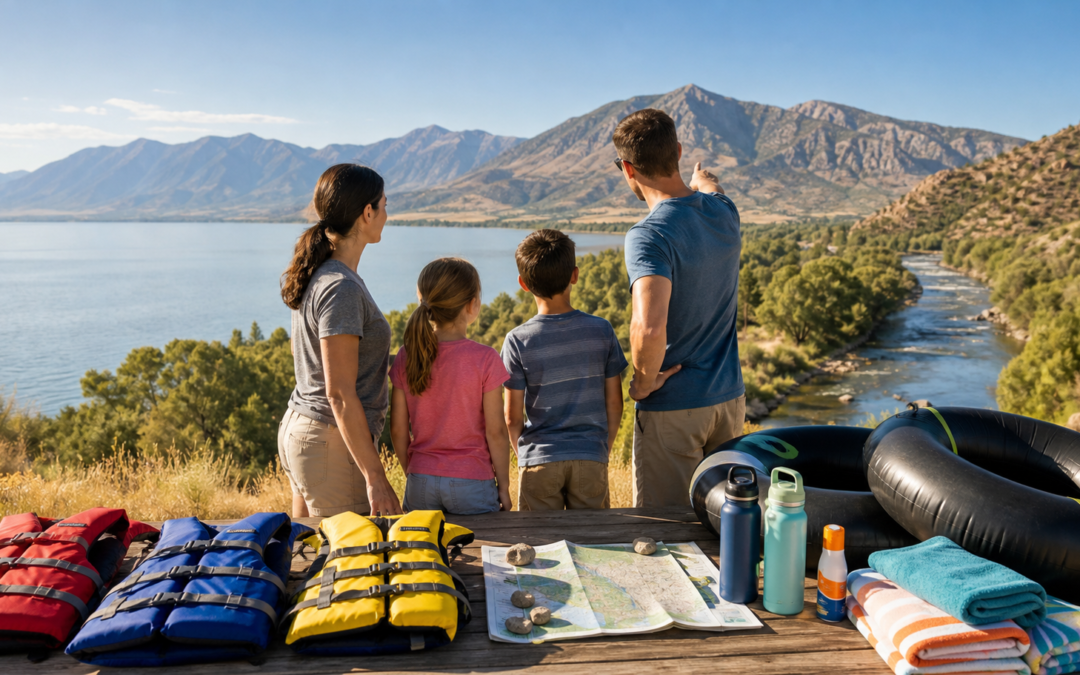
Quick answer: Choose Utah Lake when your group wants a bigger, slower-paced lake day: boating, paddling, beaches, marina access, fishing, or a place where people can take breaks on shore. Choose the Provo River when your group wants a cooler moving-water float with canyon scenery and is ready for river-specific planning: current, cold water, fitted life jackets, sturdy tubes, and a real take-out plan.
At a glance: which one fits your day?
- Utah Lake: Better for boating, paddling, beach time, picnic-style breaks, and groups that want more room to spread out.
- Provo River: Better for a colder, more active tube float where the current does part of the work but also demands more attention.
- Families with younger kids: Start with the easiest exit, shortest outing, and best-fitting life jackets. Do not plan around the bravest person in the group.
- Current checks: Lake water quality, wind, river flow, weather, and access can change. Check official sources before you load the car.
- Gear: Utah Lake often needs lake-day gear. The Provo River needs river-worthy tubes, PFDs, secure footwear, water, sun protection, and a pump.
The honest answer: they are not the same kind of water day
Utah Lake and the Provo River are close enough that families often talk about them in the same breath. “Should we go to the lake or float the river?” sounds like one decision. If you are still scanning options, our guide to the best places to float and tube near Provo gives you a wider Utah County menu.
It is really two different kinds of days.
Utah Lake is the open-water option. It gives you marinas, beaches, paddling, boating, fishing, wide views, and places where part of the group can hang out on shore. The Provo River is the moving-water option. It is colder, narrower, more active, and less forgiving if the group shows up with bad gear or no plan.
If you are choosing between the two, start with your people. Are they confident around moving water? Do they want a mellow shore day? Are there kids, nervous swimmers, dogs, grandparents, or first-timers? The best choice is usually the one that fits the least confident person, not the one that sounds most exciting at breakfast.
Choose Utah Lake if you want space, shore breaks, and more ways to play
Utah Lake makes sense when the goal is a flexible summer water day. The Utah Lake Authority’s recreation page points visitors toward common lake activities like boating, paddling, beaches, fishing, camping, bird watching, and marina access. That variety is the lake’s big advantage.
A lake day can work well when some people want to paddle, some want to fish, some want to sit under shade, and somebody will absolutely need a snack break every 20 minutes. Shore access matters. So do bathrooms, parking, wind, marina rules, and whether your group has a realistic way to get out of the sun.
The tradeoff is that Utah Lake asks different questions than the river:
- Is the wind building?
- Which access point fits your group?
- Is the swim or beach area open and appropriate for what you want to do?
- Have you checked current water-quality advisories?
- Do kids and weaker swimmers have properly fitted life jackets?
For families, the lake can be the easier call when you want more control over how long people are in the water. It can also be the wrong call on a windy day, during a water-quality advisory, or when your group is not set up for sun, heat, and open-water supervision.
Check Utah Lake water quality before anyone gets in
This is the big lake-specific step. The Utah DEQ recreational water-quality page says Utah monitors popular lakes, reservoirs, and rivers for harmful algal blooms and waterborne pathogens such as E. coli. The same page notes that 2026 recreational monitoring is active and points readers to live map updates.
For this article, I checked Utah DEQ’s live recreational waters map data on July 14, 2026. Recent Utah Lake entries included July 13 monitoring at American Fork and Lindon-area sites, with some locations marked “Looks Good” and some entries showing no advisory listed in the data returned. That is useful, but it is not a forever answer. It is a reminder to check the official map for the exact place and day you plan to use.
The Utah Lake Authority also keeps a plain-language harmful algae blooms page that reminds visitors to learn what HABs look like and avoid suspicious areas. That matters for families and dogs. If water looks off, smells bad, has scum, paint-like streaks, or the official map shows a concern, choose another plan.
Choose the Provo River if you want a cooler, more active float
The Provo River is a different animal. It can be a great summer float, but it is not a beach day with a current painted on top.
On the river, your group is committing to movement. You need a put-in, a take-out, gear that can handle rocks and current, footwear that stays on, a way to inflate tubes, and a plan for what happens if someone gets cold, nervous, separated, or tired. If you are new to the river, start with our Provo River tubing guide before deciding that today is the day.
Utah Valley’s visitor guide describes the basic Provo River float setup, including the Lower Provo River Park/Vivian Park area and the need to plan transportation. That shuttle and take-out piece is where a lot of first-timers underestimate the day. You are not just picking water. You are picking logistics.
The river check is flow, cold water, and life jackets
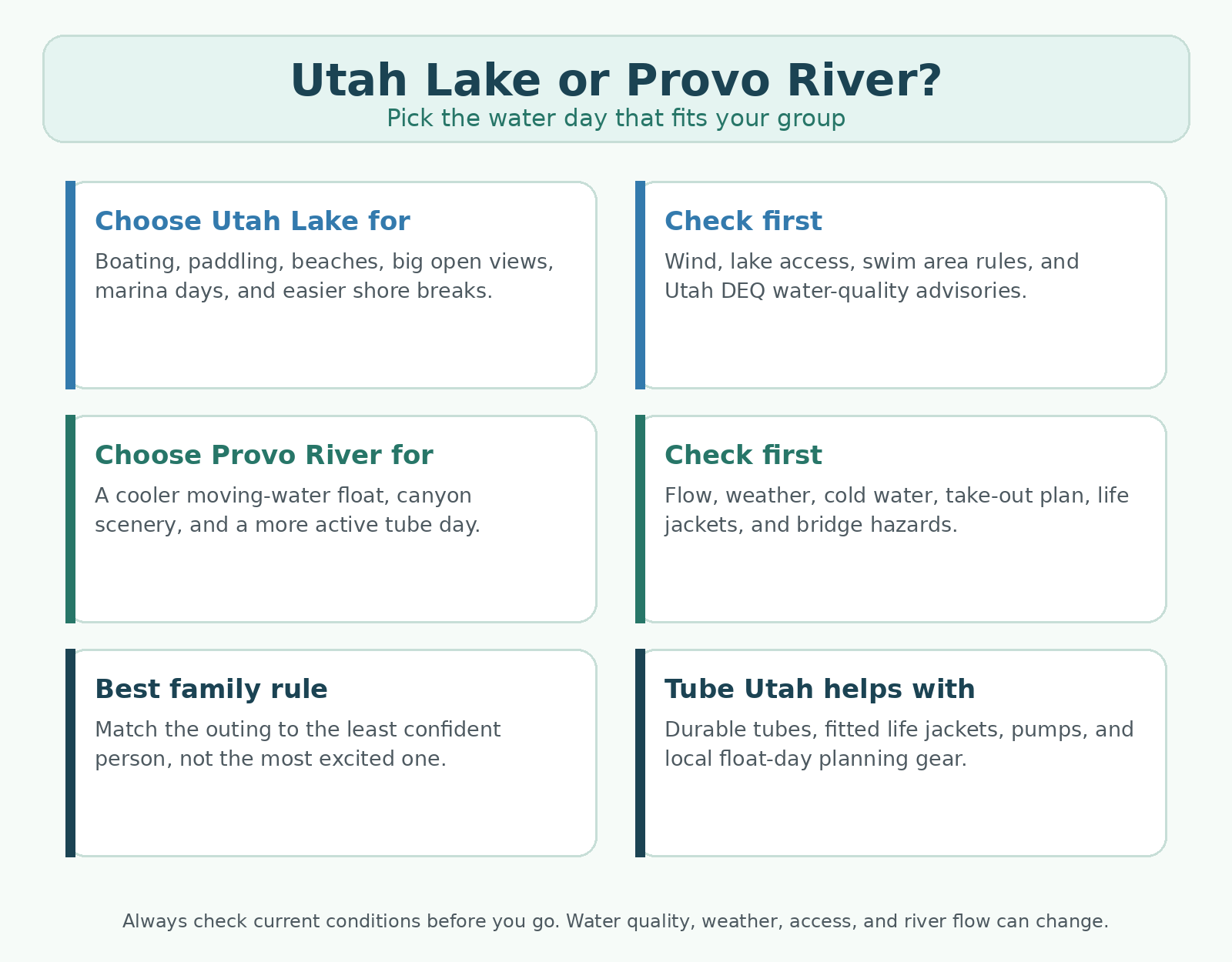
Before a Provo River float, check the USGS Provo River at Provo gauge. USGS instantaneous data fetched for this article returned 41.3 cfs at 1:45 a.m. MDT on July 14, 2026, with the usual provisional-data note. Do not turn that number into a personal safety rule. Use it as a current-condition check, then look at the actual river, the weather, and your group.
Cold water also matters. The Provo River can feel refreshing on a hot day, but cold moving water wears people down faster than they expect. Kids, nervous swimmers, and anyone who falls off a tube may need help quickly.
Utah County’s Chapter 6 boating code requires a Coast Guard-approved flotation device for people swimming or using tubes and other floating devices on the Provo River in unincorporated county areas. Legal language aside, the practical rule is simple: fit the PFD before launch and keep it on.
If you want a deeper safety pass, read Is the Provo River Safe to Float? and the Provo River tubing with kids guide before putting younger kids in moving water.
Which is better for families?
It depends on the family. That sounds like a dodge, but it is the truth.
Utah Lake may fit better when your group needs easy shore breaks, mixed activities, a picnic setup, or a shorter outing. The Provo River may fit better when everyone is comfortable with moving water, wearing life jackets, following a plan, and staying together from put-in to take-out.
Here is the gut-check I would use:
- If your group includes toddlers or nervous kids: lean toward the easiest shore-access option or a very conservative river plan.
- If your group wants tubes and canyon scenery: the Provo River is the stronger fit, if conditions and gear line up.
- If your group wants boats, paddleboards, beaches, or fishing: Utah Lake is usually the better fit.
- If the forecast is windy: think hard before choosing open water.
- If the river looks fast, cold, high, muddy, or full of debris: do not force the float.
- If Utah Lake has a water-quality advisory where you planned to go: change locations or change plans.
Gear is where the two plans really split
A Utah Lake day might mean shade, paddle gear, beach gear, towels, water shoes, coolers, and life jackets for anyone boating, paddling, or swimming beyond a very controlled setting.
A Provo River day needs river-specific gear. Cheap pool floats are not built for rocks, branches, current, and repeated bumps. Loose flip-flops are a great way to donate footwear to the river. One shared water bottle is not a hydration plan.
For the river, start with durable tubes, properly fitted PFDs, secure shoes, dry storage, sunscreen, drinking water, and a pump. Our what to bring tubing the Provo River checklist covers the full packing list.
If you do not want to buy and store river gear for one or two summer days, Tube Utah’s life jacket and tube rental options are built for local float planning. You can also compare tube rentals in Utah County if you are planning from American Fork, Lehi, Orem, Provo, or nearby towns.
Quick decision guide
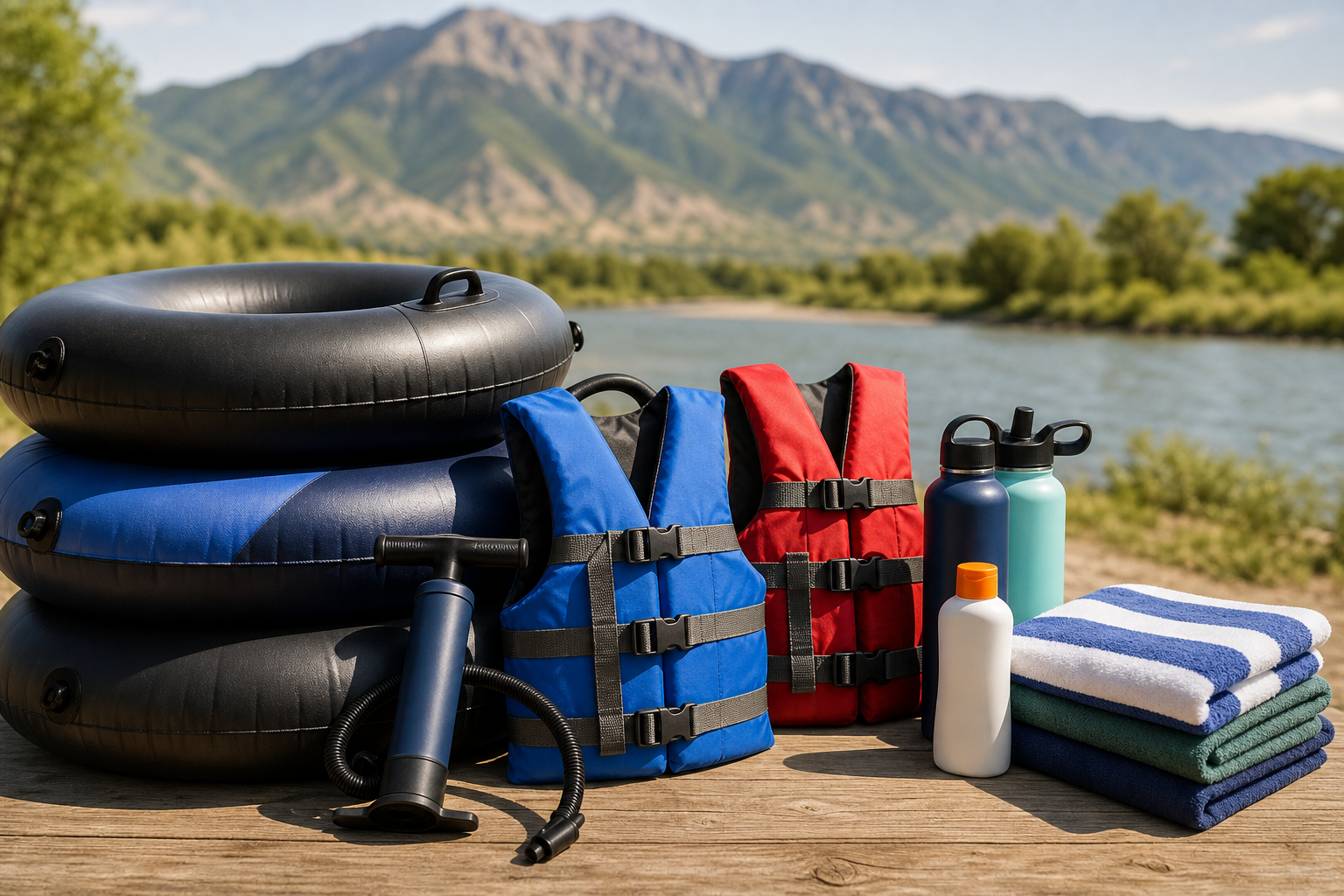
Pick Utah Lake when:
- You want beaches, boating, paddling, fishing, or a slower shore-based day.
- Your group needs bathrooms, picnic breaks, shade, and flexible timing.
- You have checked water quality, wind, access, and rules for the specific spot.
- You are prepared for open sun and open-water supervision.
Pick the Provo River when:
- You want a cooler moving-water tubing day.
- Everyone has a fitted life jacket and understands the plan.
- You have checked flow, weather, access, and take-out logistics.
- You have river-worthy tubes, secure shoes, water, sun protection, and a pump.
Skip or change plans when:
- Utah Lake has a current advisory at your planned location.
- The river looks too fast, high, muddy, cold, or debris-filled for your group.
- Storms, lightning, strong wind, or extreme heat make the day feel sketchy.
- You are missing life jackets or basic gear.
- The group is relying on alcohol, bravado, or “we’ll figure it out.”
FAQ
Is Utah Lake better than the Provo River for kids?
For some families, yes. Utah Lake can offer easier shore breaks and more flexible outing lengths. The Provo River can still work for prepared families, but moving cold water requires closer planning, fitted life jackets, and a clear take-out plan.
Is the Provo River colder than Utah Lake?
Often, yes. The Provo River can feel cold even during hot weather. Treat it like cold moving water, not a pool.
Should I check algae advisories before going to Utah Lake?
Yes. Check Utah DEQ’s recreational water-quality map before swimming, wading, paddling, or taking dogs near the water. Advisories and local conditions can change.
Can I use the same tube at Utah Lake and on the Provo River?
Use gear that fits the place. A flimsy pool float may be fine for lounging in a controlled pool, but it is a poor choice for the Provo River. For river tubing, use durable tubes designed for bumps, current, and real use.
Where should I start if I want to float the Provo River?
Start with the Provo River tubing guide and the current Provo River float checklist. Check flow, weather, road/access conditions, gear, and your take-out plan before you leave.
Sources and further reading
- Utah DEQ Recreational Water Quality – official HAB and E. coli monitoring information and current-condition map entry point.
- Utah DEQ live recreational waters map – map checked for Utah Lake monitoring/advisory entries before publishing.
- Utah Lake Authority: Things to Do at Utah Lake – lake recreation, access, and activity overview.
- Utah Lake Authority: Harmful Algae Blooms – HAB awareness and lake-specific safety reminders.
- USGS Water Data: Provo River at Provo, UT – current/provisional river data.
- Utah County Code, Chapter 6 Boating – county flotation and boating rules.
- Utah Valley: Float the Provo River – visitor-oriented float overview.
Planning the river version of the day? Tube Utah can help with durable river tubes, fitted life jackets, pumps, and local pickup-friendly gear for Utah County groups. Check current conditions first, then build the day around the people in your group.