
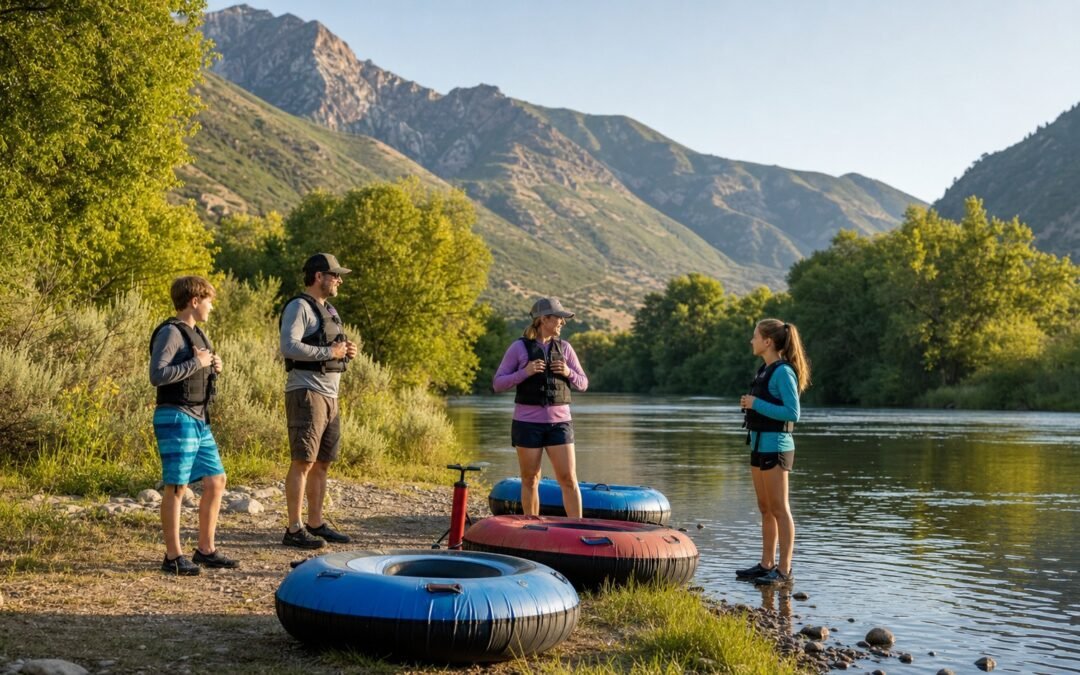
Late July can make a Utah water day look easy: blue sky, warm air, and a river or lake waiting at the end of the drive. This weekend needs a closer look. Utah Valley is heading into dangerous heat, the lower Provo is moving with a substantial Deer Creek release, and several Utah Lake access points have current water-quality warnings.
Quick answer for July 30-August 2: Check the exact water, access point, and time stamp before leaving. The National Weather Service has an Extreme Heat Watch for Utah Valley from Saturday afternoon through Sunday evening. At 2:15 a.m. MDT Thursday, Central Utah Water reported a provisional 627.25 cfs release from Deer Creek Reservoir to the stream. Utah DEQ’s map also showed harmful algal bloom warnings at several northern Utah Lake sites. None of those readings should be treated as a blanket yes-or-no answer for your outing.
The late-July snapshot
These details were checked early Thursday, July 30, 2026. They will age quickly, so use the linked official pages for a fresh check.
- Heat: The National Weather Service alert for Utah Valley calls for dangerously hot conditions this weekend, with temperatures up to 105 degrees possible and unusually warm nights. The watch runs from Saturday afternoon through Sunday evening.
- Lower Provo release: The Central Utah Water streamflow dashboard showed a Deer Creek Reservoir release-to-stream reading of 627.25 cfs at 2:15 a.m. MDT. CUWCD labels the data provisional and subject to change.
- Utah Lake water quality: The Utah DEQ recreational water-quality map showed HAB warnings at American Fork Marina and Beach, sites near Lindon Marina, and Saratoga Springs Marina. The Lindon Marina beach record also noted E. coli above safe recreational thresholds. Other monitored locations, including Utah Lake State Park Marina sites, were marked “Looks Good” at the time of our check.
- Roads and access: Use the UDOT Traffic live map for incidents and construction, then verify the specific park, marina, put-in, and take-out. A clear route does not guarantee that a parking lot, ramp, or river access is open.
That is the useful picture, but it is still only a snapshot. River releases can change. Weather alerts can be upgraded. Algae can collect at one shoreline while another site has a different result. Check again before you drive.
1. Read the river number without turning it into a green light
The Deer Creek release helps explain why the lower Provo can feel different from one week to the next. CFS means cubic feet per second. It tells you how much water passes a point, not whether a trip is safe for your family.
The 627.25 cfs reading above is a release-to-stream measurement at Deer Creek. It is not a universal reading for every bend, bridge, or access point downstream. River shape, obstacles, cold water, changing releases, and your group’s ability all matter.
For the full explanation, read how Deer Creek Reservoir releases affect Provo River tubing. Our weekend Provo River float check also walks through the flow, weather, gear, and on-site checks in order.
2. Treat extreme heat as a planning problem
Getting in the water does not cancel the heat. You still have a drive, parking lot, setup, shuttle, and cleanup. A delayed pickup or flat tube feels very different when the air is over 100 degrees.
For this weekend, an earlier start is the smarter plan. Bring more drinking water than the float itself seems to require, use sunscreen, and build shade into the day. Keep shoes on around hot pavement and rocky access points. If a child, older adult, or anyone in the group is struggling with the heat, change the outing rather than trying to push through it.
The Provo River adds a second temperature problem: the water can remain cold even when the air is punishingly hot. Our guide to why the Provo River stays cold in summer explains that mismatch.
3. Check the exact Utah Lake shoreline you plan to use
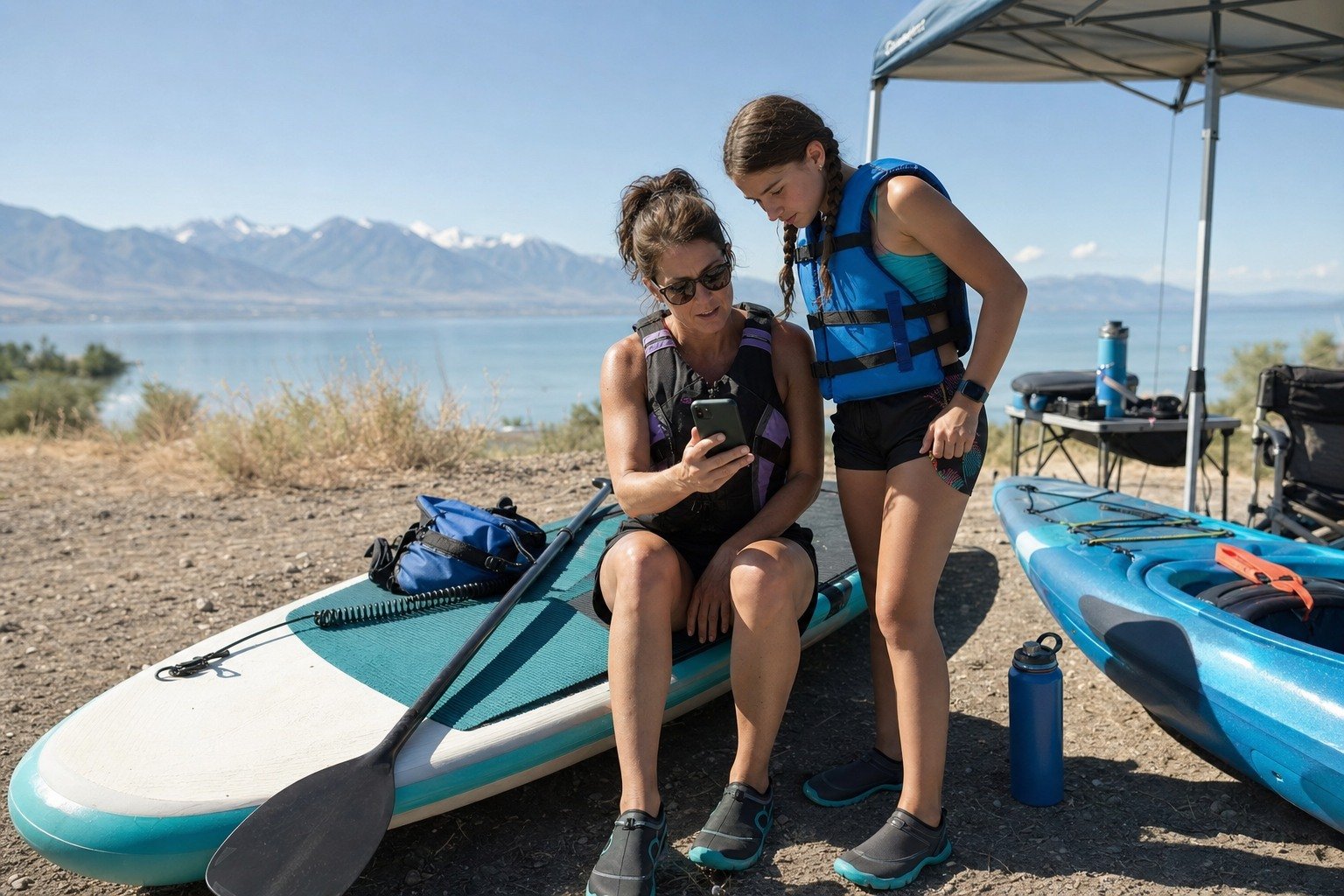
“Utah Lake is fine” and “Utah Lake is closed” are both too broad to be useful. The state’s live map reports conditions by site. On Thursday morning, several north-shore locations carried HAB warnings while monitored marina locations at Utah Lake State Park were marked “Looks Good.” That can change, and a status at one beach does not transfer to another.
Open the DEQ map and select the marina, beach, or launch you actually plan to visit. Follow the posted advisory for that site. If the water has visible scum, paint-like streaks, unusual color, or an odor that concerns you, keep people and pets out and report the bloom through the state page.
Our Utah Lake algae watch for families explains how to use the map without guessing from the view across the lake.
4. Confirm both ends of the trip
River days fail at the edges. The road is open, but the lot is full. The put-in works, but the take-out is blocked. The group gets separated because nobody settled the vehicle plan before launching.
Check UDOT for the drive, then confirm your specific access. If you are heading into Provo Canyon, review our Provo Canyon road and access watch. Have a take-out driver, a meeting point, and a backup plan before anyone gets in the water.
5. Make the gear check boring
Boring is good here. Use durable river tubes, properly fitted life jackets, secure water shoes, and a working pump. Keep phones and keys in a reliable waterproof setup. Do not tie people or tubes together in moving water.
The first-timer Provo River packing list covers what belongs in the car and what is better left home. If your group is new to moving water, read what first-timers should know about Provo River safety before choosing the outing.
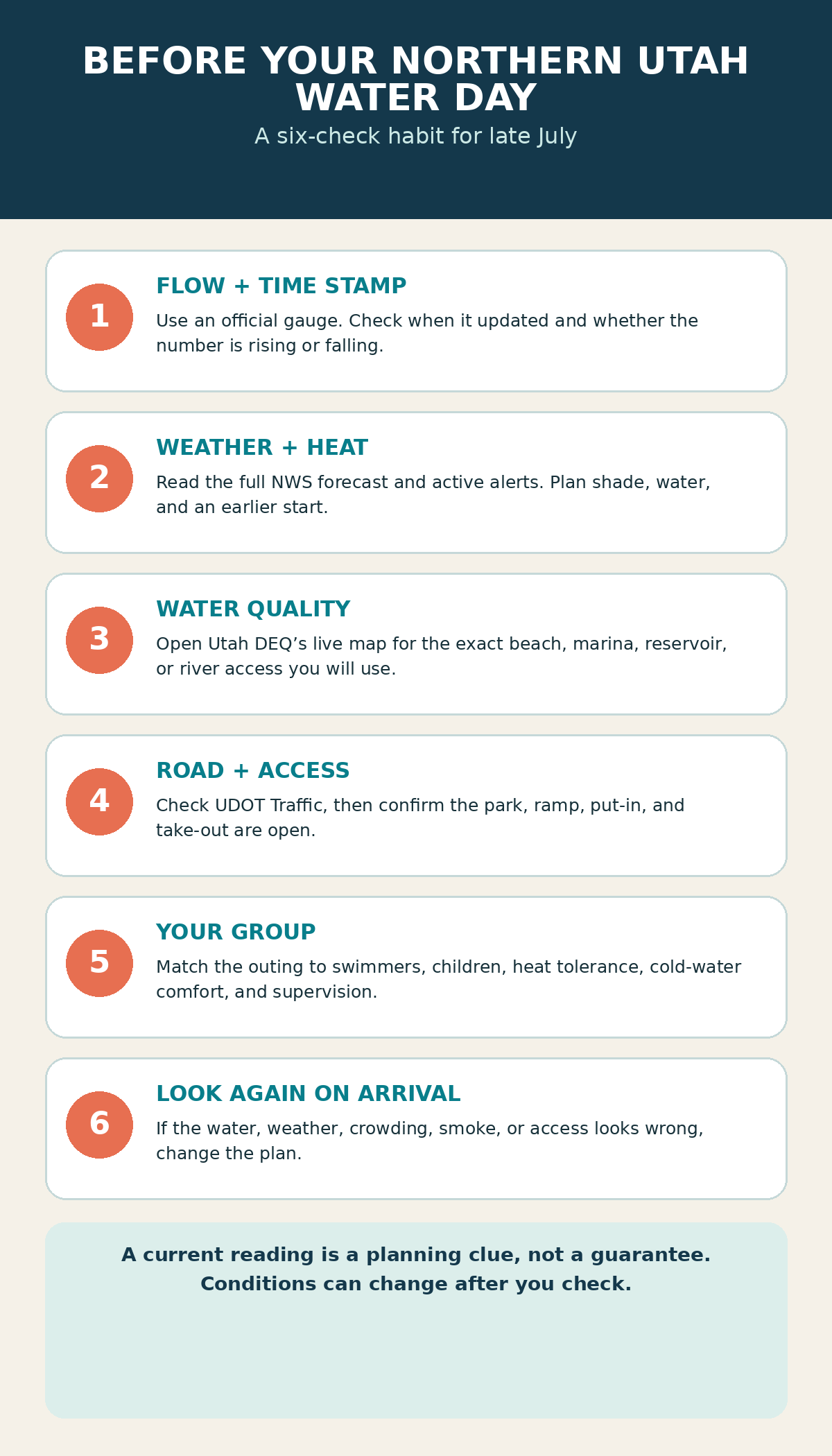
A 60-second check before you leave
- Open the current NWS forecast and active alerts.
- Read the latest official flow or release time stamp.
- Check the DEQ status for the exact water access.
- Review UDOT Traffic and the park or marina page.
- Confirm life jackets, water shoes, water, shade, and pump.
- Set the driver, take-out, meeting point, and backup plan.
Planning a Provo River day and missing dependable gear? Tube Utah has life jacket and tube rental options for Utah County groups. Get the conditions and access sorted first, then make sure every person has gear that fits.
FAQ
Is 627 cfs safe for tubing the Provo River?
A CFS reading is not a safety rating. It is one piece of current data. Check the time stamp and trend, then consider cold water, obstacles, access, weather, equipment, and the abilities of everyone in the group. If the river looks beyond your group’s comfort or experience when you arrive, do not launch.
Does one Utah Lake HAB warning apply to the entire lake?
No. Utah DEQ reports by monitored site and local health departments issue advisories. Check the exact marina, beach, or access point you plan to use, and follow posted instructions there.
Should we skip a water day during an Extreme Heat Watch?
The alert is a reason to take the heat seriously, not an automatic decision for every family. Read the current NWS alert, consider the most heat-sensitive person in your group, start earlier if you go, carry enough water, plan shade, and be willing to change plans.
Sources and further reading
- Central Utah Water Conservancy District: current and trending stream data
- National Weather Service: active alerts for the Provo area
- National Weather Service: Provo-area point forecast
- Utah Department of Environmental Quality: recreational water-quality map
- UDOT Traffic: live incidents, construction, and road conditions
Current-condition details checked July 30, 2026, at approximately 2:15 a.m. MDT. Always recheck official sources shortly before departure.