
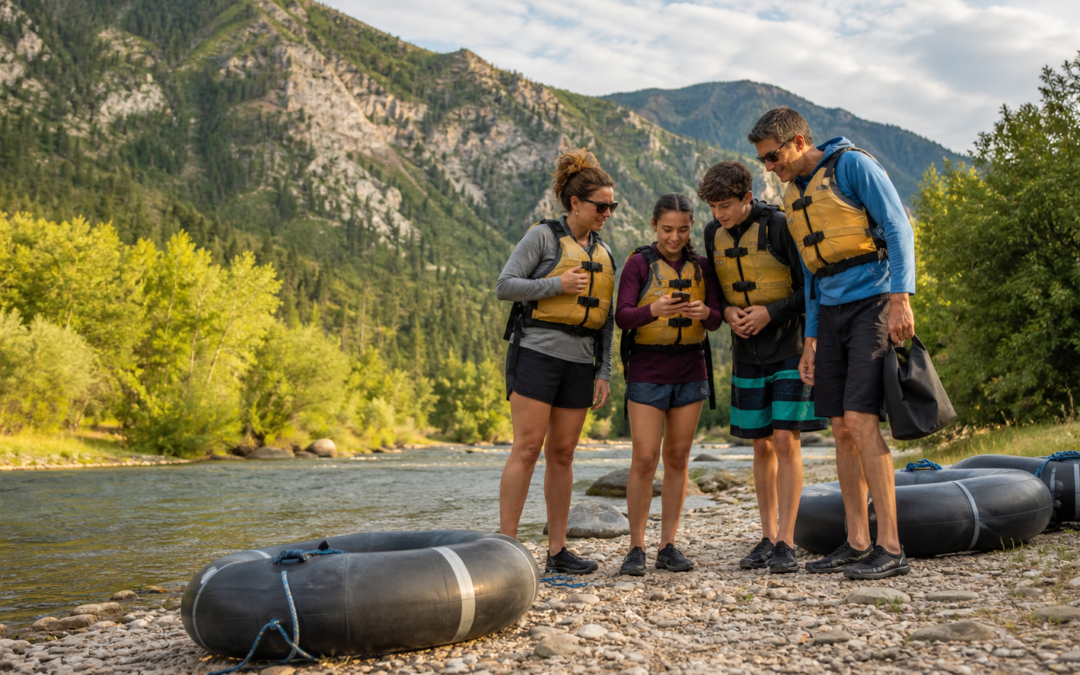
Late August can still hand Utah County a hot, clear float day. It can also hand you a shorter afternoon, a changing release, a school-night schedule, or a thunderstorm that was not in yesterday’s plan.
That is why the last floats of summer deserve a little more planning than the first ones. You do not need to turn the day into an expedition. You do need to check the right things before the tubes go in the car.
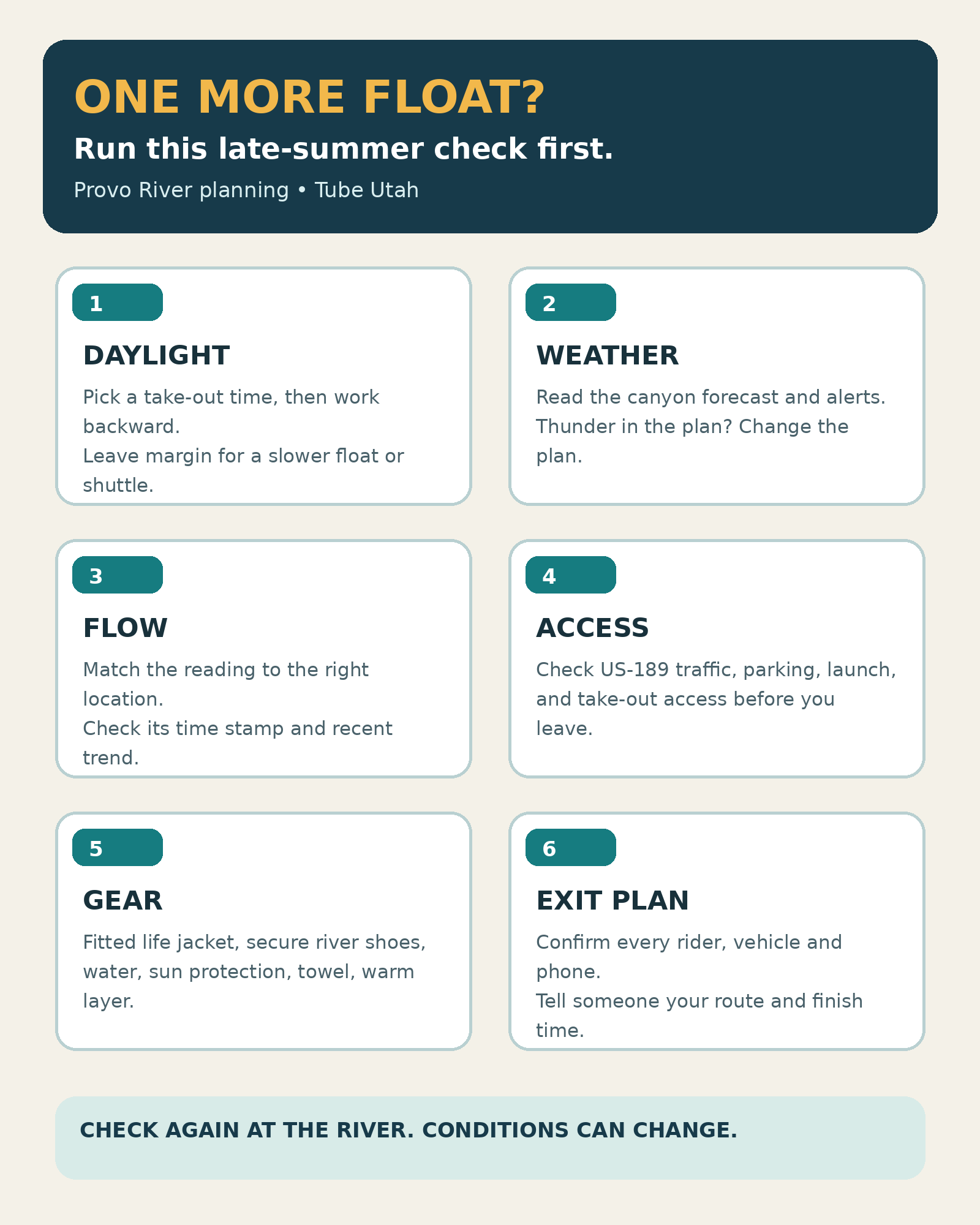
This weekend’s planning snapshot
Checked Thursday, August 20, 2026, at about 2:15 a.m. MDT:
- The National Weather Service point forecast for the Provo Canyon area called for sunny conditions Thursday, then a 30% chance of afternoon showers and thunderstorms Friday and Saturday. No active NWS alert was returned for the forecast point at check time.
- The Provo River Water Users Association’s latest posted Deer Creek entry was dated August 17 and listed an average release of 485 CFS. The entries for August 15 and 16 were 390 and 410 CFS. Those numbers are release data, not a universal tubing rating.
- The U.S. Naval Observatory listed sunset near Utah County at 8:16 p.m. for August 20.
These are a dated snapshot, not a weekend promise. Open the current NWS forecast, active NWS alerts, Deer Creek release table, and UDOT Traffic map again before leaving.
1. Set your take-out time before your launch time
“We will get out before dark” is not much of a plan. A delayed shuttle, a slower group, a missed take-out, or ten extra minutes spent gathering gear can eat the margin quickly.
Pick the time you want everyone dry, accounted for, and moving toward the vehicle. Then work backward through your expected float, staging, shuttle, and parking time. If the estimate leaves no room for a delay, start earlier or save the float for another day.
The evening air can cool fast in the canyon even after a hot afternoon. The river also stays cold through summer, as our guide to why the Provo River stays cold explains. Pack a dry towel and warm layer for the take-out instead of leaving both in the wrong car.
2. Read the full forecast, not one weather icon
A sunny high temperature does not settle the float-day decision. Open the detailed canyon forecast and look at the hour when your group will be on the water. Check wind, thunderstorm timing, temperature around take-out, and any active alert.
If thunder enters the plan, change the plan. The National Weather Service advises getting into a substantial building or an enclosed, metal-topped vehicle when thunder is heard. An open river, bank, picnic shelter, or lone tree is not a suitable lightning shelter. Our guide to monsoon storms and float days has a practical postpone-or-go checklist.
Forecasts change. Check once while making the plan, again before the drive, and once more at the launch.
3. Check flow data with its location and time stamp
Late-season releases can change. A CFS number only helps if you know where it came from, when it was posted, and what the recent trend looks like.
The Deer Creek table is useful because it identifies the date and average release. The Central Utah Water streamflow dashboard adds current and trending information for several reaches. Neither source turns a number into a blanket “good for tubing” verdict.
If CFS still feels like river math, read our plain-English guide to what CFS means for tubing. Then use the Deer Creek release explainer to understand how upstream operations relate to Provo River planning.
At the bank, stop and look
- Is the water moving differently than your group expected?
- Are branches, strainers, debris, or difficult banks visible?
- Can every person manage the current conditions and the planned exit?
- Does anyone already feel cold, rushed, uncertain, or under-equipped?
If the real river does not match the plan, do not force the plan.
4. Check US-189, parking, and both ends of the route
Provo Canyon traffic can turn a comfortable schedule into a rushed launch. Look at UDOT Traffic for crashes, construction, restrictions, and delays on US-189. Do not assume an old closure post or last weekend’s drive describes today.
Confirm the launch and take-out before leaving home. Make sure every driver knows the route, every vehicle has the right keys, and the phone with the shuttle plan is not floating downstream in an unsealed pocket. Our Provo Canyon access and road closure guide explains what to check without freezing temporary conditions into a permanent answer.
5. Pack for the last hour, not only the hottest hour
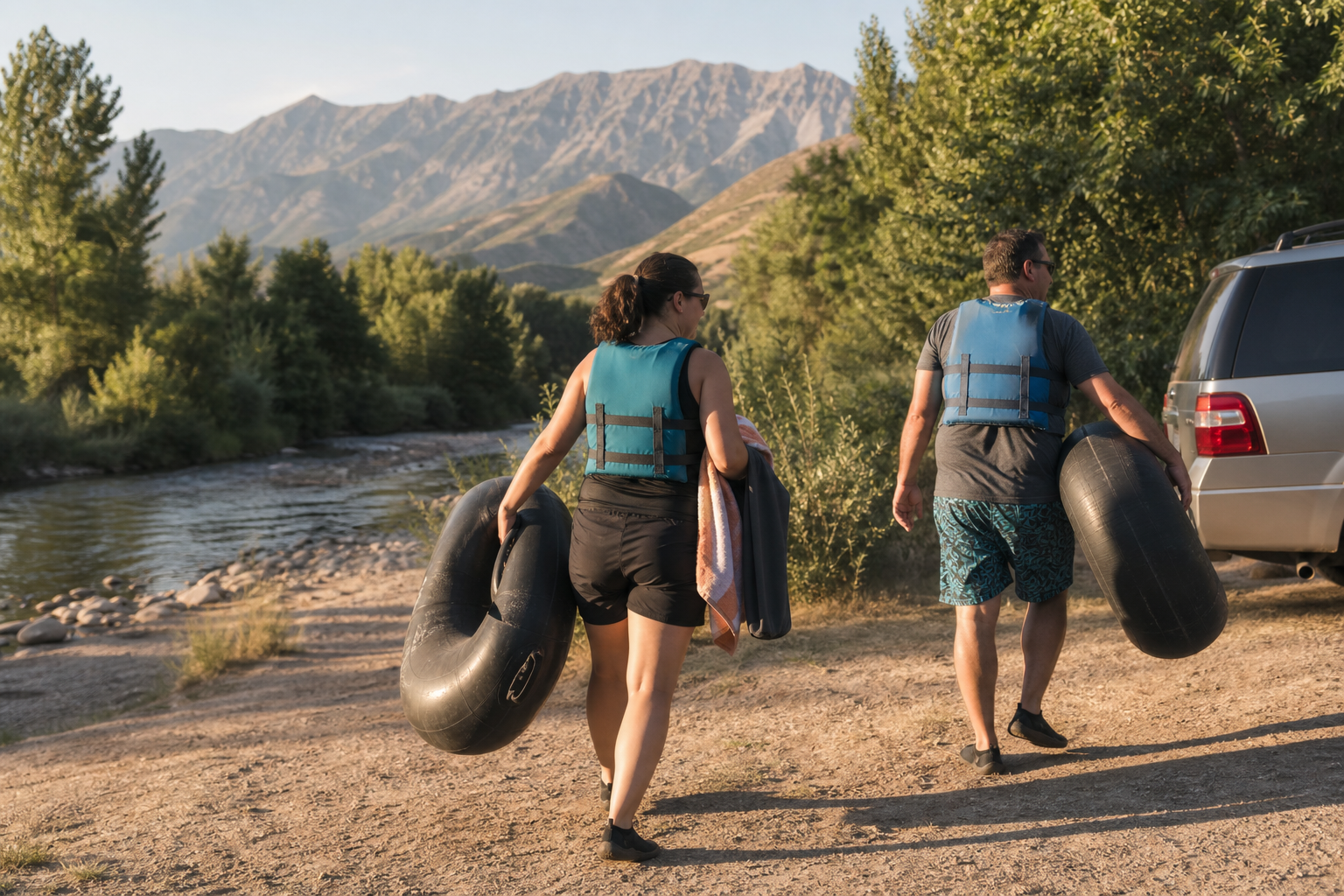
A 95-degree valley forecast can make a life jacket, warm layer, or secure footwear feel optional in the driveway. They are not the items to improvise at the water.
- A properly sized, serviceable U.S. Coast Guard-approved life jacket for each person
- Secure river shoes rather than loose flip-flops
- Drinking water and sun protection
- A dry towel and warm layer staged at the take-out
- A secured phone or communication plan
- Tubes checked for leaks, with inflation handled before the group falls behind schedule
Utah’s official life jacket guidance says each life jacket must fit its wearer, be serviceable, and be used according to its approval label. For the rest of the bag, use our guide to what to bring tubing the Provo River.
6. Adjust for school schedules and mixed groups
End-of-summer groups often have more clocks running: school the next morning, sports practice, work, a rental return, or one driver who cannot stay late. Put those constraints into the plan before anyone launches.
Children, first-timers, and people who are not confident swimmers need a more conservative call, not pressure to keep up with the group. Conditions that feel manageable to one adult may be a poor match for someone else. Review the route and current conditions together, and give anyone a comfortable way to opt out.
Parents can use our Provo River tubing with kids guide for a fuller set of planning questions. No online checklist can decide whether today’s water suits a particular child or group.
A two-minute vehicle check
- Launch and take-out are agreed upon.
- Keys are with the right driver.
- Everyone has a fitted life jacket and secure shoes.
- Forecast, alerts, flow, and traffic were checked today.
- One person outside the group knows the route and expected finish time.
- The take-out vehicle has towels, dry clothes, and water.
If one of those answers is fuzzy, fix it in the parking lot. The river is a bad place to discover that the shuttle existed only in a group text nobody read.
Need the gear before one more float?
Tube Utah offers life jacket and tube rental options with pickup in American Fork. Check availability before building the day around a rental, especially when school and late-season schedules narrow the pickup window.
For route basics, access, gear, and first-timer planning in one place, bookmark the Provo River tubing guide.
Frequently asked questions
Is late August too late to tube the Provo River?
A calendar date does not answer that by itself. Check current release and stream data, the weather and alerts, access, daylight, water temperature, gear, and whether the conditions fit your group. If any part does not add up, choose another day or activity.
How late should we start?
There is no single start time for every route, flow, shuttle, and group. Set a firm take-out time with daylight and cooling-temperature margin, estimate the whole trip, then work backward. Start earlier than the bare minimum.
Does a lower CFS number mean the river is safer?
No. CFS measures volume, not safety. Different flows can expose or cover hazards, change steering, alter depth, and affect float time. Use the correct source and time stamp, look at the trend, and compare the data with the river in front of you.
Where should I check water quality?
Use the Utah Division of Water Quality’s current recreational water quality map. Monitoring and advisories can change, and conditions at one waterbody do not automatically describe another.
Sources and further reading
- National Weather Service: current Provo Canyon area forecast
- National Weather Service: lightning safety
- Provo River Water Users Association: Deer Creek data
- Central Utah Water Conservancy District: streamflow dashboard
- Utah Department of Transportation: live traffic and road conditions
- Utah Division of Water Quality: recreational water quality
- Utah Division of Outdoor Recreation: life jackets
- U.S. Naval Observatory: August 20, 2026 sun data near Utah County