
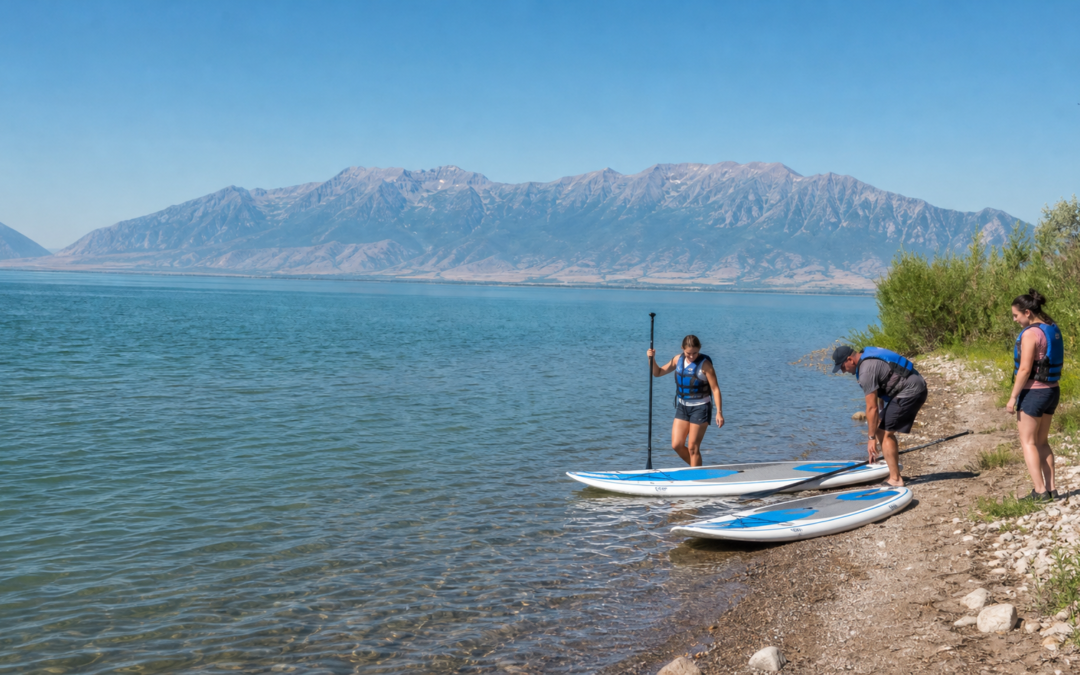
Utah Lake and the Provo River sit minutes apart, but they do not behave like the same body of water. That becomes obvious during harmful algal bloom season. A broad patch of lake water can develop the color and surface streaks people associate with a bloom, while the nearby river may look clear and fast.
The short explanation is water movement, depth, temperature, sunlight and nutrients. Utah Lake often gives cyanobacteria more of the setup they need to multiply in the open water. The Provo River usually has a different setup, but “different” does not mean immune.
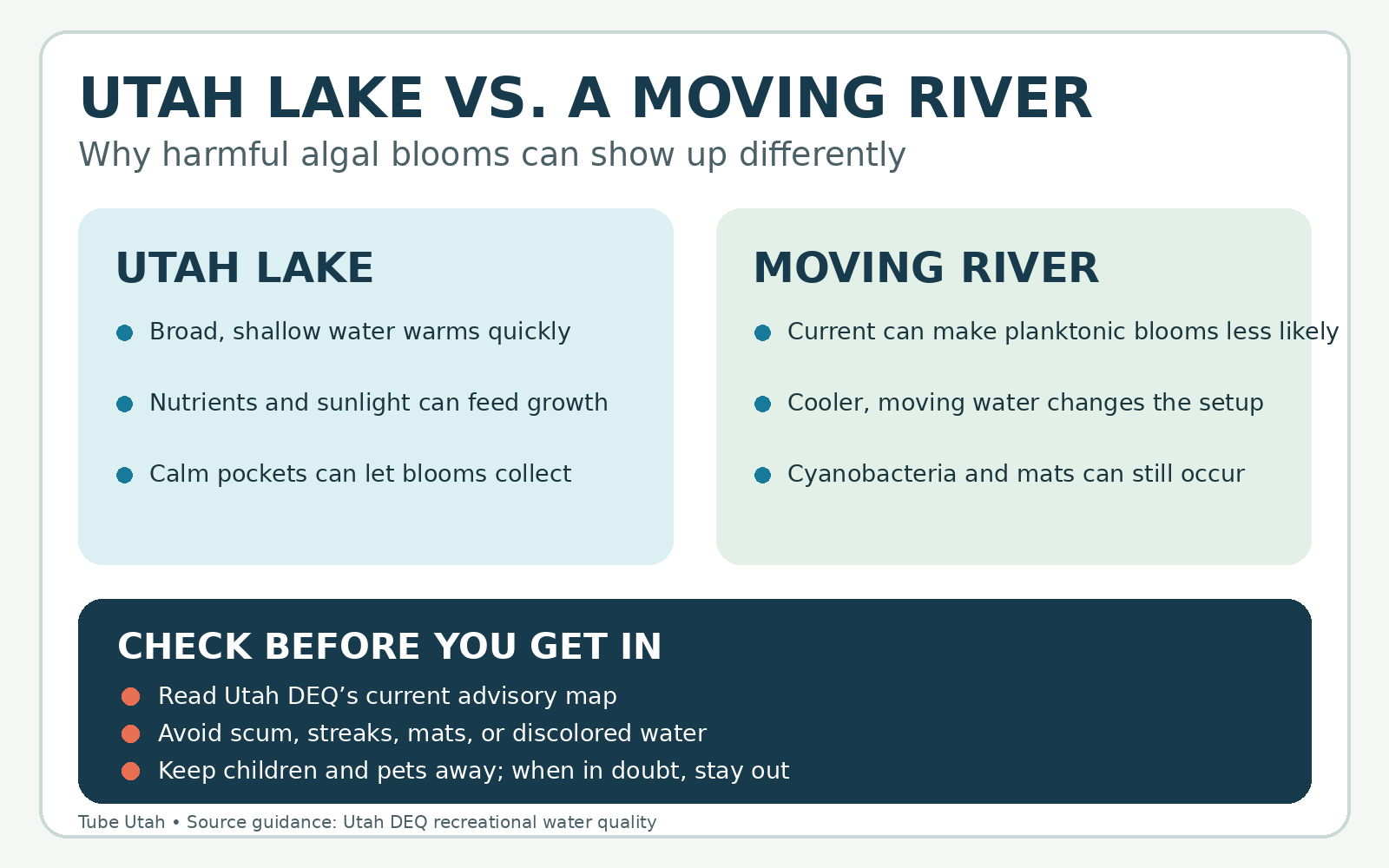
Quick answer: Utah Lake is broad and shallow, so it warms quickly. Nutrients, sunlight and calm or slow-moving pockets can help cyanobacteria multiply and collect into visible blooms. The Provo River is colder and continuously moving through the canyon, which usually makes a large lake-style bloom less likely. Cyanobacteria can still occur in rivers, especially as attached mats or in slower pockets. Check Utah’s official recreational water map before every water day and stay out of water with visible scum, mats, streaks or unusual discoloration.
First, the “algae” is usually cyanobacteria
The name is a little misleading. The organisms behind many freshwater harmful algal blooms are cyanobacteria, sometimes called blue-green algae. They photosynthesize like plants, but they are bacteria.
A bloom happens when cyanobacteria multiply rapidly into a visible concentration. Some species can produce toxins, while others do not. You cannot determine toxicity by color or smell alone, so an odd-looking patch of water is not something to test with your hands, feet or dog.
The Utah Division of Water Quality recreational water-quality program tells visitors not to swim, tube or boat in scummy water and to keep children, pets and livestock away. Its advice is pleasantly simple: when in doubt, stay out.
Why Utah Lake has a bloom-friendly setup
Utah Lake is large, shallow and exposed to plenty of summer sun. Those traits do not create a bloom by themselves, but they help explain why the lake can look different from a cold canyon river.
Shallow water warms faster
The Utah Lake Authority notes that the lake’s shallow depth allows much of the water column to warm faster than deeper water bodies. Warm temperatures and abundant sunlight are two conditions associated with cyanobacterial growth.
Late summer can bring several bloom ingredients together at once: warm water, long sunny days and periods when parts of the lake are relatively calm.
Nutrients provide fuel
Cyanobacteria use nutrients, including nitrogen and phosphorus. Those nutrients occur naturally, but runoff, wastewater and urban stormwater can add more. The U.S. Environmental Protection Agency’s nutrient-pollution guide explains how agriculture, stormwater and wastewater can carry nitrogen and phosphorus into waterways.
Utah Lake also has a complicated internal nutrient cycle. Wind can stir its shallow bottom, moving sediment and nutrients back into the water. The result is not a neat “pollution goes in, bloom comes out” equation. Weather, mixing, temperature, available light and the type of cyanobacteria all matter.
A lake gives blooms room to collect
On open water, cyanobacteria can concentrate near the surface or gather along a shoreline when wind and current push them. Conditions can vary across a lake this large. One marina may look normal while another area has visible streaks or scum.
The Utah Lake Authority has a useful explainer on why Utah Lake gets algal blooms, including the roles of warmth, nutrients, wind and the lake’s large surface area.
Why the Provo River usually looks different
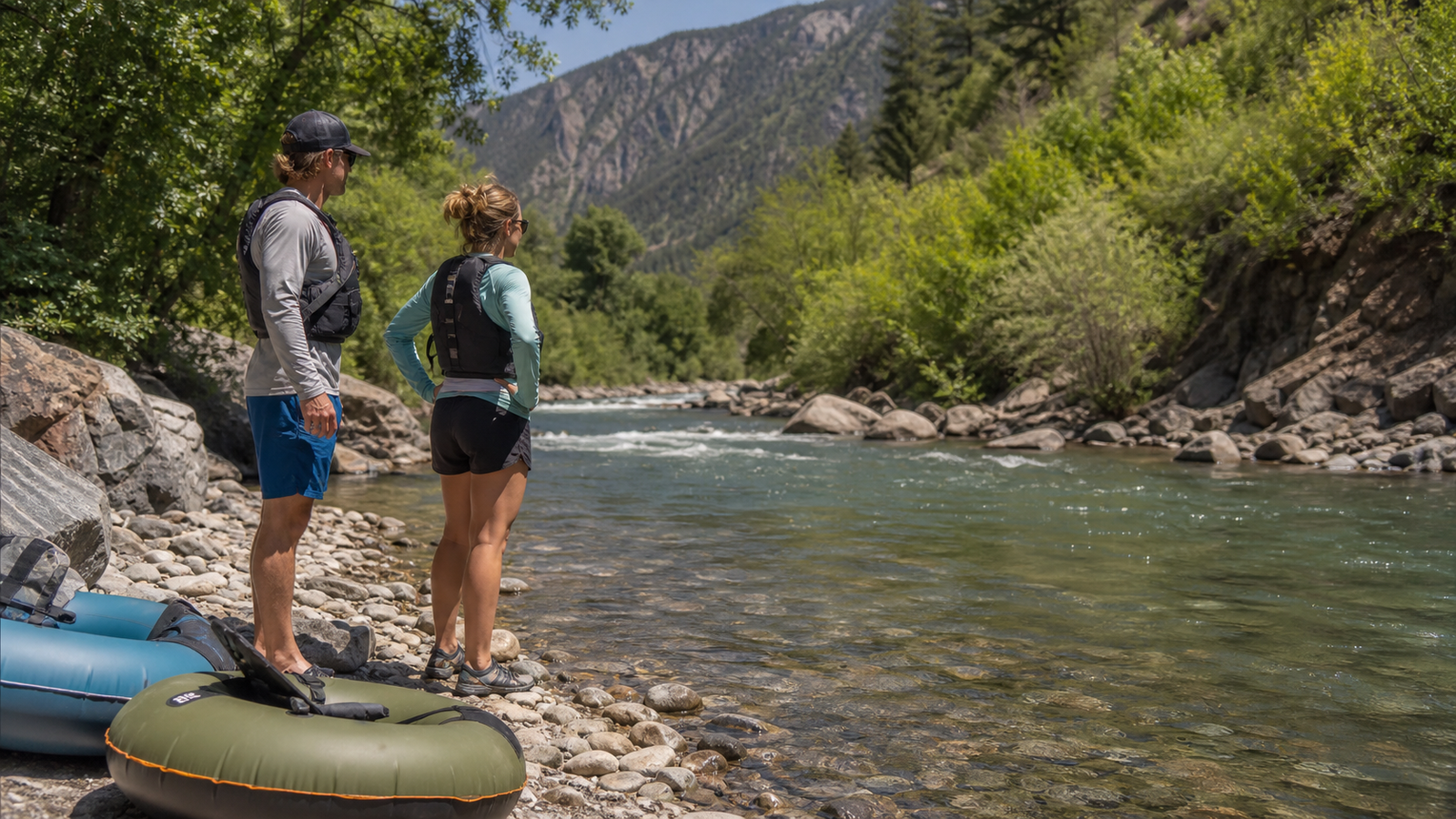
The Provo River below Deer Creek Reservoir is moving downstream through Provo Canyon. It is also noticeably cold, even on a hot afternoon. If you have floated it before, neither fact needs much explaining.
That combination changes the odds for a broad, surface-floating bloom. Moving water gives free-floating cyanobacteria less opportunity to sit in one sunny, warm patch and build the same kind of concentration people often see on a lake. Cold releases and canyon shade also create a different temperature pattern.
For more background on that cold water, read why the Provo River stays cold in summer. Our simple CFS guide for Utah floaters explains how moving-water volume can change from day to day without declaring a universal “safe” number.
Rivers are not bloom-proof
This is the part worth remembering. Cyanobacteria live in many types of water, and Utah’s monitoring program covers lakes, reservoirs and rivers. A river can have slower edges, backwaters and attached growth even when the main current keeps moving.
Utah DEQ distinguishes free-floating harmful algal blooms from harmful algal mats. Mats, sometimes called benthic mats, can grow attached to rocks, plants or the bottom. Pieces may detach and collect near shore. That is one reason “the river is moving, so algae cannot happen here” is the wrong conclusion.
Conditions also change by location. The Provo River enters and leaves reservoirs, passes through slower reaches and receives tributary water. A clear stretch in the canyon says nothing definitive about a lake beach, marina or downstream pocket.
What this comparison does not mean: It does not mean Utah Lake is always under an advisory, and it does not mean the Provo River is always clear of cyanobacteria or other water-quality concerns. Check the exact access point you plan to use. Advisories and sampling results can change.
What families should check before a Utah water day
Do the same five-minute check whether you are heading for Utah Lake, Deer Creek or the Provo River:
- Open the Utah DEQ current recreational water-quality map and look up the specific water body or access area.
- Read the advisory level and date. Monitoring is not continuous, and not every location is tested for every concern.
- Look at the water when you arrive. Avoid scum, foam-like streaks, mats, paint-like color or unusual discoloration.
- Keep children and pets out of suspect water. Dogs can swallow water and lick material from their coats.
- Report a suspected bloom through Utah DEQ rather than trying to identify it yourself.
The EPA’s freshwater harmful-algae overview also explains how people and animals can be exposed through contact, swallowing water or breathing spray. Follow posted public-health guidance if an advisory is active.
Choosing between Utah Lake and the Provo River
| If you want… | Think about… |
|---|---|
| A broad lake day for paddling or relaxed shoreline recreation | Utah Lake can fit that plan, but check the exact access point for current HAB or pathogen advisories before getting in. |
| A moving-water tubing day | The Provo River is the better fit, but cold water, current, flow changes and river hazards require their own planning. |
| The easiest family option | There is no automatic winner. Age, swimming comfort, weather, water quality, equipment and the day’s conditions should drive the decision. |
Our Utah Lake vs. Provo River comparison covers the practical recreation differences. If the river is your choice, start with the Provo River tubing guide for route, gear and hazard planning.
Planning a Provo River day after checking the water, weather and flow? Tube Utah offers life jacket and tube rental options in Utah County. Gear helps, but it does not replace a current-conditions check or good judgment at the river.
Frequently asked questions
Does Utah Lake always have harmful algae?
No. Bloom conditions and advisory status vary by date and location. Utah Lake is large enough for conditions to differ across access points. Use the current Utah DEQ map rather than an old social post, photo or headline.
Can the Provo River get harmful algal blooms?
Cyanobacteria can occur in rivers. Large open-water blooms may be less likely in cold, moving reaches than in warm, slow lake water, but attached mats and growth in slower pockets can still occur. Never treat moving water as a guarantee.
Is green water always toxic?
No, and clear water is not proof that every risk is absent. A visual check helps you avoid obvious trouble, but official monitoring and advisory information matter because cyanotoxins cannot be confirmed by sight alone.
What should I do if the water looks suspicious?
Stay out, keep children and pets away, and report the suspected bloom to Utah DEQ. Follow Utah Poison Control or medical and veterinary guidance if a person or animal may have been exposed.
Sources and further reading
- Utah Division of Water Quality: recreational water quality, current advisories and HAB guidance
- Utah Lake Authority: Why Does Utah Lake Get Algal Blooms?
- Utah Lake Authority: algae blooms and lake education resources
- U.S. EPA: harmful algae, cyanobacteria and cyanotoxins
- U.S. EPA: nutrient pollution sources and solutions